New publication : When do public services enable immigrant integration?
Envisioning Translocality
Enabling Institutions
Enforcing Practices
Access to a public service does not necessarily or only mean the ability to use it. And digitalisation does not automatically make a service more accessible.
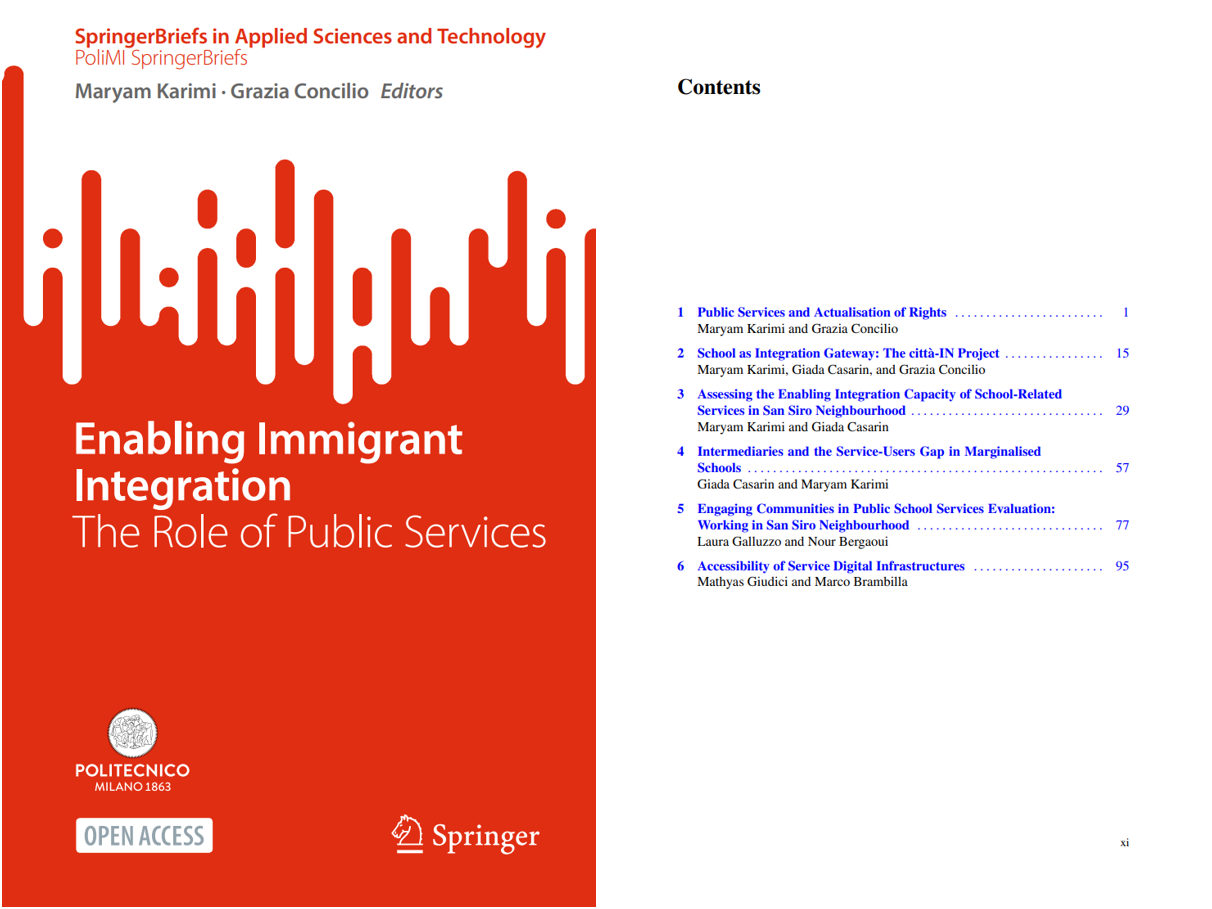
These questions are at the centre of the new open-access volume Enabling Immigrant Integration: The Role of Public Services, edited by Maryam Karimi and Grazia Concilio and published by Springer on August 13th 2026.
The book starts from a fundamental premise: public services are important interfaces between people and their rights. For immigrant families, barriers related to language, information, digital procedures, institutional communication, and administrative complexity can transform apparently universal services into difficult and sometimes inaccessible pathways.
The volume explores this challenge through school-related public services in Milan, drawing on the experience of the città-IN project in the San Siro neighbourhood. Schools are examined not only as educational institutions but also as potential gateways to integration, where families encounter public administration, digital infrastructure, welfare services, and opportunities to participate in urban life.
A central contribution of the book is the application of Mediation Grammar, a user-centred framework developed within the @H2020 easyRights project for evaluating the enabling capacity of public services. It examines the “empowerment gaps” experienced by service users across three interconnected dimensions: language accessibility, information adequacy, and actualisation of rights.
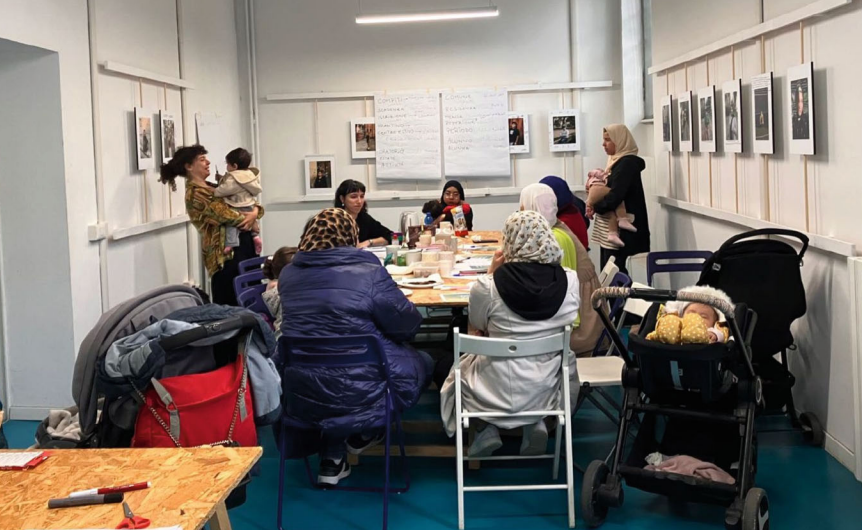
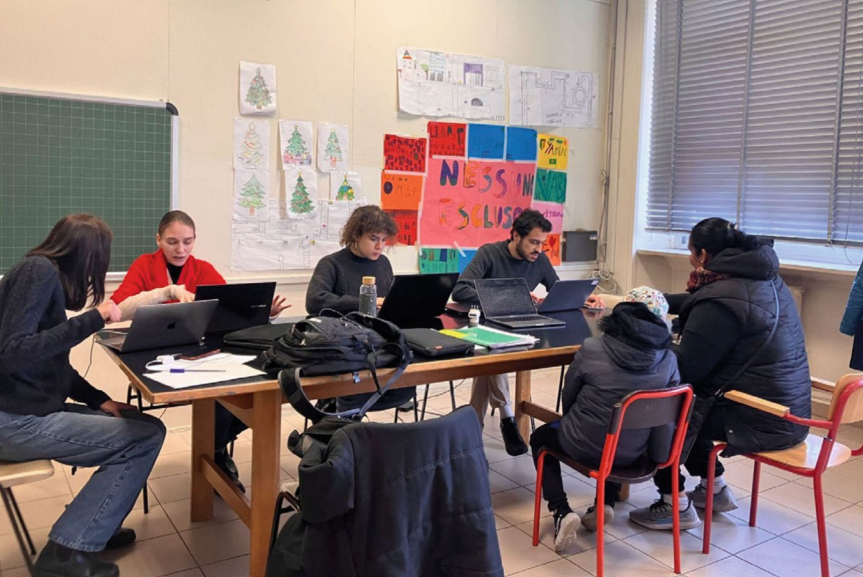
Through surveys with immigrant families, interviews with service providers and intermediary actors, participant observation, community engagement and co-design, and analysis of digital service interfaces, the chapters ask a broader institutional question: How can public services move from requiring vulnerable users to constantly adapt to complex systems towards building institutional capacities that enable autonomy, inclusion and the exercise of rights?
The volume also highlights the crucial role played by schools, neighbourhood organisations, cultural mediators and other intermediary actors. While these actors frequently bridge gaps between families and public institutions, their work also reveals where public services themselves need to become more accessible, responsive and inclusive.
The book brings together contributions by Maryam Karimi, Grazia Concilio, Giada Casarin, Laura Galluzzo, Nour Bergaoui, Mathyas Giudici and Marco Brambilla, connecting perspectives from urban studies, migration and integration, public service design, participatory research and digital accessibility.
Enabling Immigrant Integration: The Role of Public Services is available Open Access through Springer Nature.