Peripheral visions, rethinking planning: CALL at the 2026 World Planning Schools Congress
Envisioning Translocality
Enabling Institutions
Enforcing Practices
From June 29 to July 3, planning scholars from around the world gathered in Finland for the 6th World Planning Schools Congress, titled Peripheral Visions – Rethinking Planning and organised by AESOP. Over the course of the week, serveral members of the CALL team took part in five sessions spanning governance, digital co-creation, science-policy dialogue, sustainability experimentation, and the future of AI in cities.
Tuesday, June 30 · Governance takes center stage
We started our congress week with Track 6: Governance, where Valeria Fedeli and Daniele Viarengo presented “Territorial cohesion: between policy frameworks, needs and local-regional institutional capacity”. Focusing on Lombardy, one of the Italian regions hit hardest by COVID-19, the paper examined a decade (2014–2024) of multi-fund resource allocation to municipalities, from Cohesion Policy through the National Recovery and Resilience Plan and pandemic-era regional measures. The central question: did the money go where the need was greatest, or where the administrative capacity to absorb it already existed? Their answer points to a familiar tension in territorial cohesion policy, and a call for regions to move from emergency-driven funding toward a more strategic, capacity-building role.
Later that afternoon, in the Special Sessions, Anna Moro and Grazia Concilio, with our international collaborator Anna De Liddo presented “ORBIS Deliberative Pathways: Digital and Transdisciplinary Co-Creation for Planning and Governance”, looking at how digital deliberation tools can support transdisciplinary collaboration in planning processes.
Thursday, July 2 · From cities and science to sustainability in practice
Day two opened with another Special Session: Valeria Fedeli, Anna Moro, Ilaria Tosoni, and Daniele Viarengo on “City Science Exchange: how to reinforce a dialogue among cities and science”, which examined how European cities are building systematic platforms for co-producing knowledge with research institutions, including a look at CRAFT, our Department’s Competence Center for this kind of work.
The centerpiece of the day came that afternoon, with Track 11: Practices and Actors, where Irene Bianchi and Grazia Concilio, alongside Maria Vitaller del Olmo presented “Hacking Practices for Urban Sustainability Transition: Insights from Prototype-Based Experimentations”. Drawing on our project PALIMPSEST, the paper argued for prototype-based experimentation as a way to move planning beyond purely technical and procedural approaches. Through art-science co-creation experiments in Jerez de la Frontera, Milan and Łódź, the panel showed how small-scale prototyping can “hack” the everyday practices that reproduce urban space, and how those micro-scale interventions can scale into durable local stewardship or influence policy more broadly.
Friday, July 3 · Closing with AI
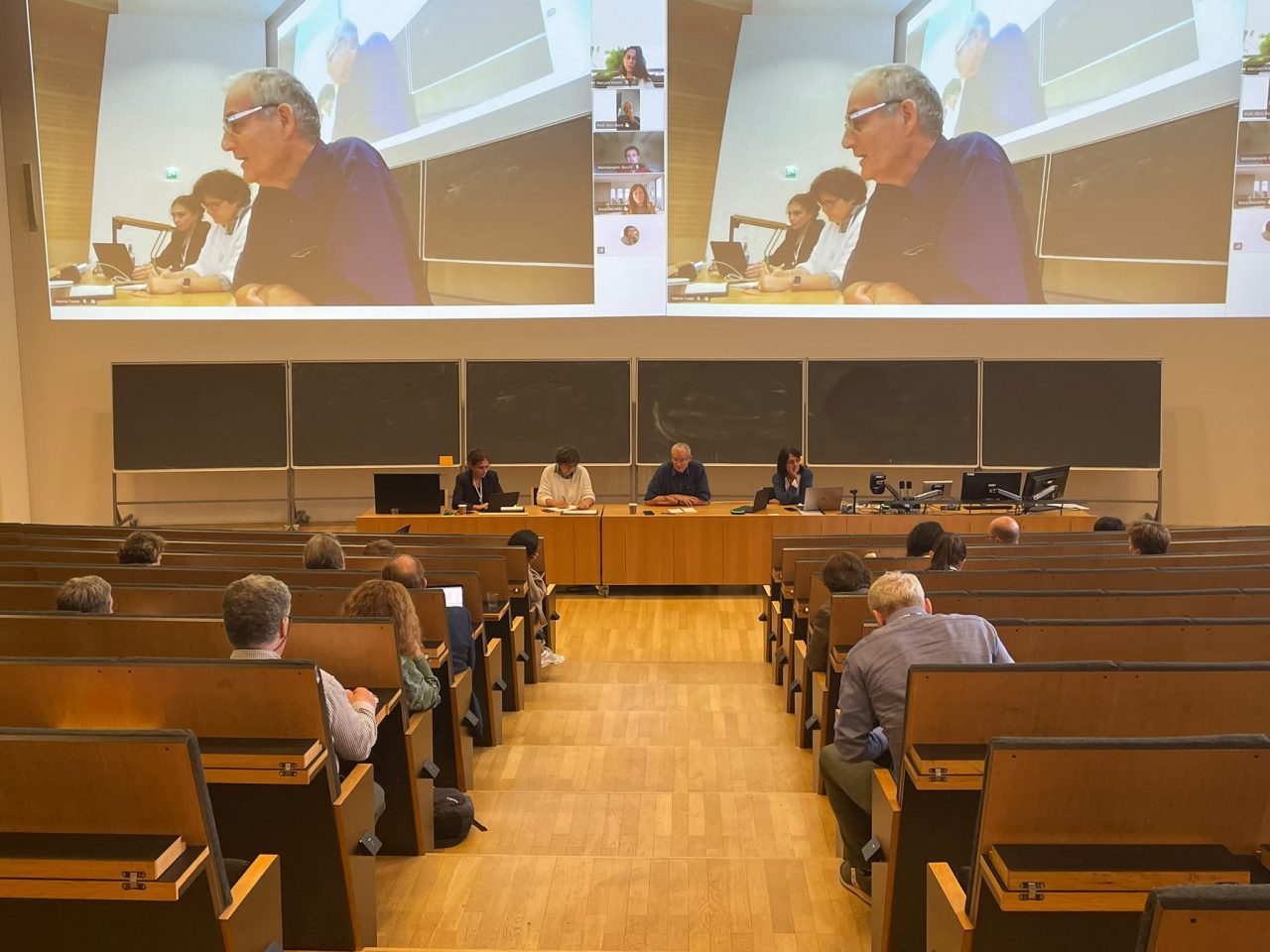
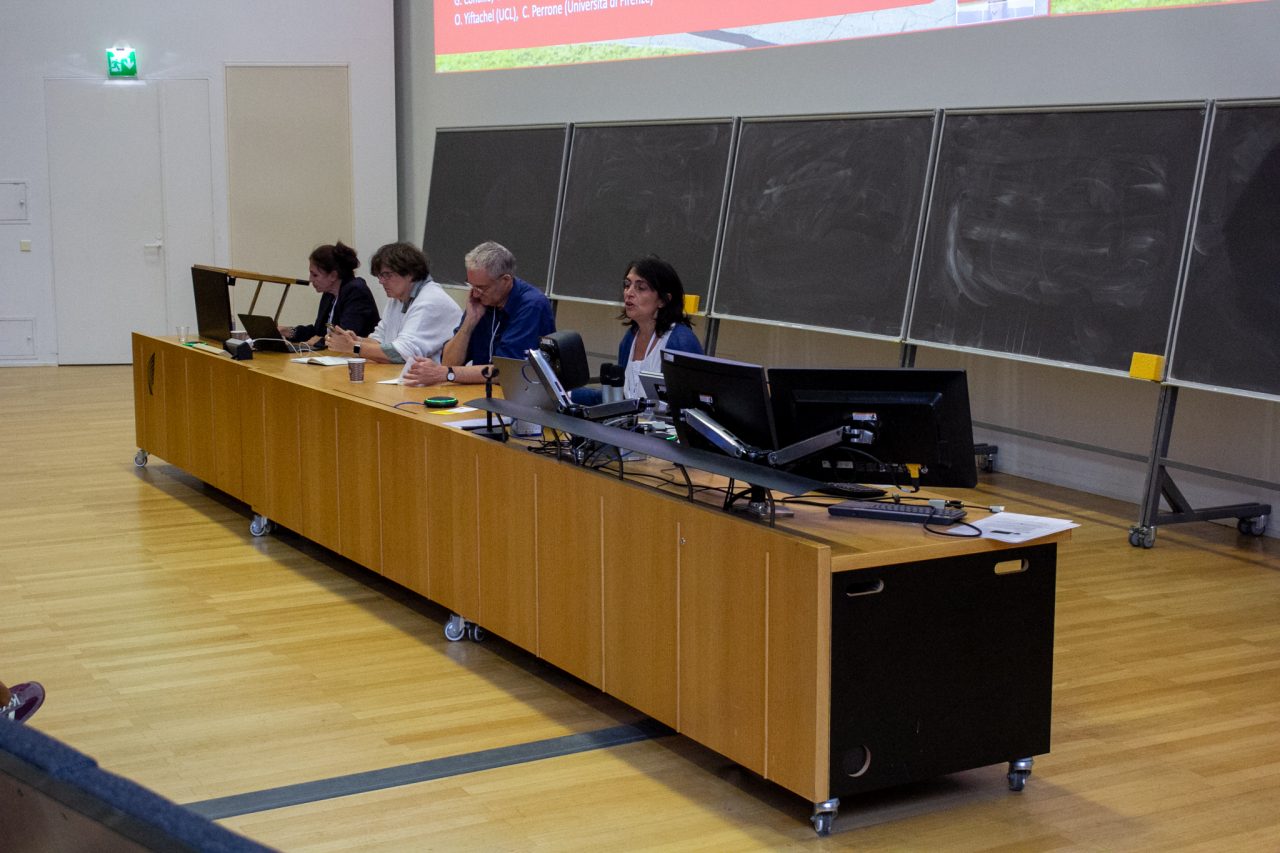
CALL’s final contricution was in the Roundtables track, co-convening “The AI shake. Opportunity or threat for urban systems?” moderatide by Grazia Concilio and Maryam Karimi, with the participation of Valeria Fedeli, Oren Yiftachel, Anna De Liddo, Camilla Perrone, Dino Borri and Michelangelo Secchi. The roundtable was organised around two complementary perspectives: first, the ethical and cultural implications of AI for planning, citizenship, and democracy; and second, the operational challenges and opportunities of using AI in complex urban systems and public governance.
Thank you to WPSC 2026 and all our co-authors and collaborators for giving us the possibility of bringing these topics to Helsinki!