Entangling soil and sky: water, mycelium and meander as languages of landscape contamination
Envisioning Translocality
Enabling Institutions
Enforcing Practices
Reflections from the Łódź Pilot Project, PALIMPSEST
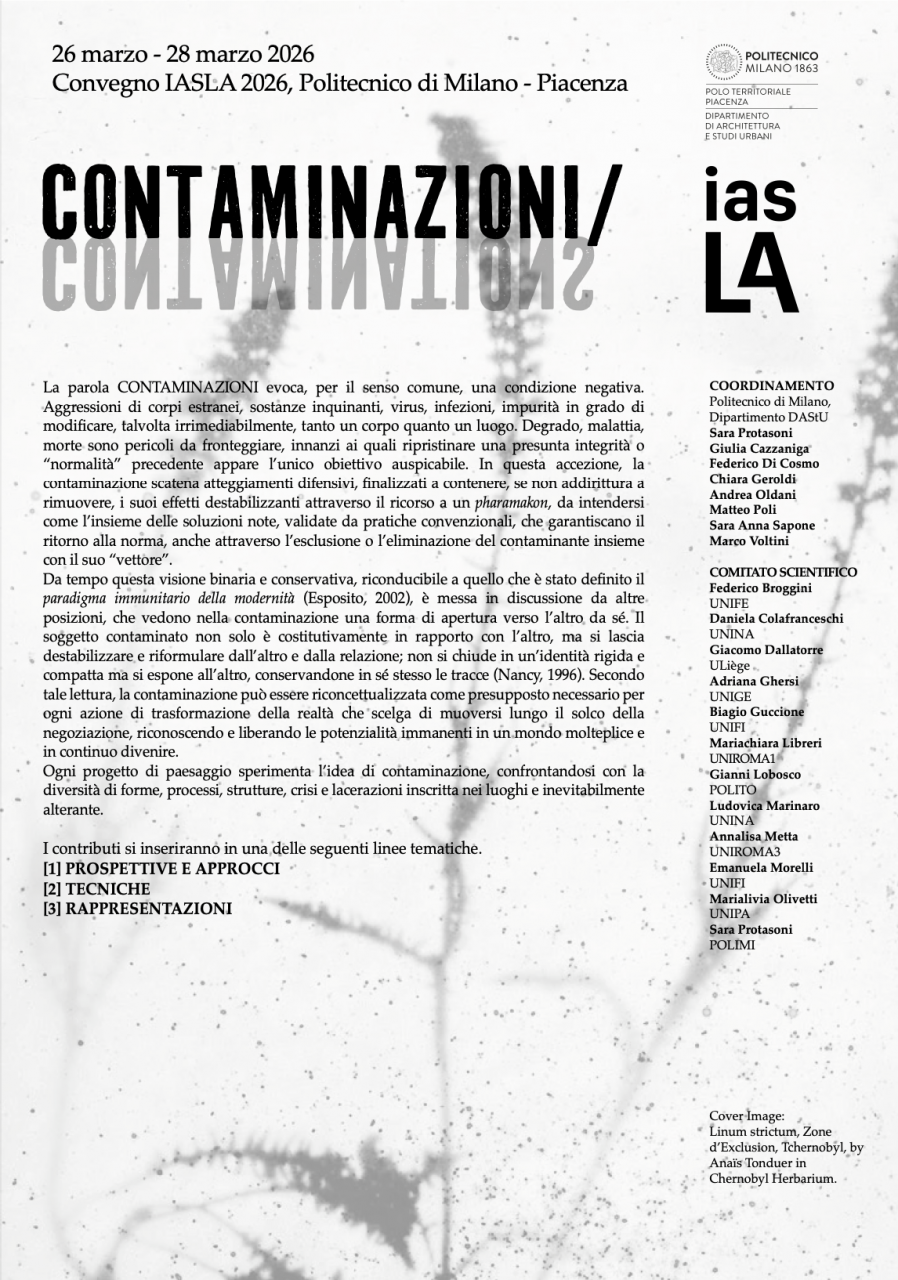
On March 27th Francesca Berni took part in the IASLA National Conference 2026 “Contaminations”, contributing to the thematic track Representations with a reflection on how landscape can be read, imagined, and reconfigured through alternative ecological narratives and spatial practices.
The contribution develops within the framework of the PALIMPSEST project, focusing on the Łódź pilot and intertwining individual research with collaborative work carried out with Irene Bianchi and Giambattista Zaccariotto.
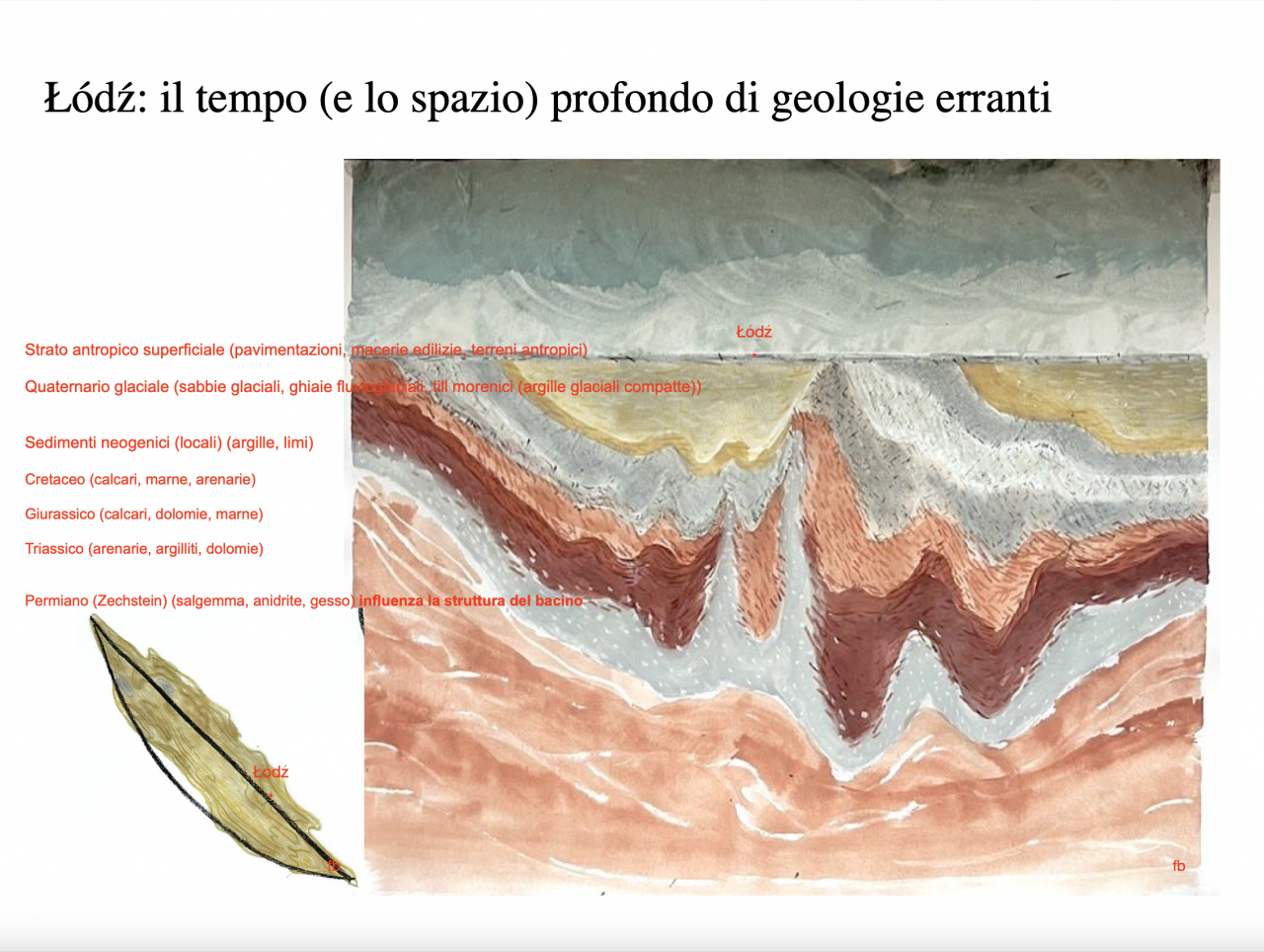
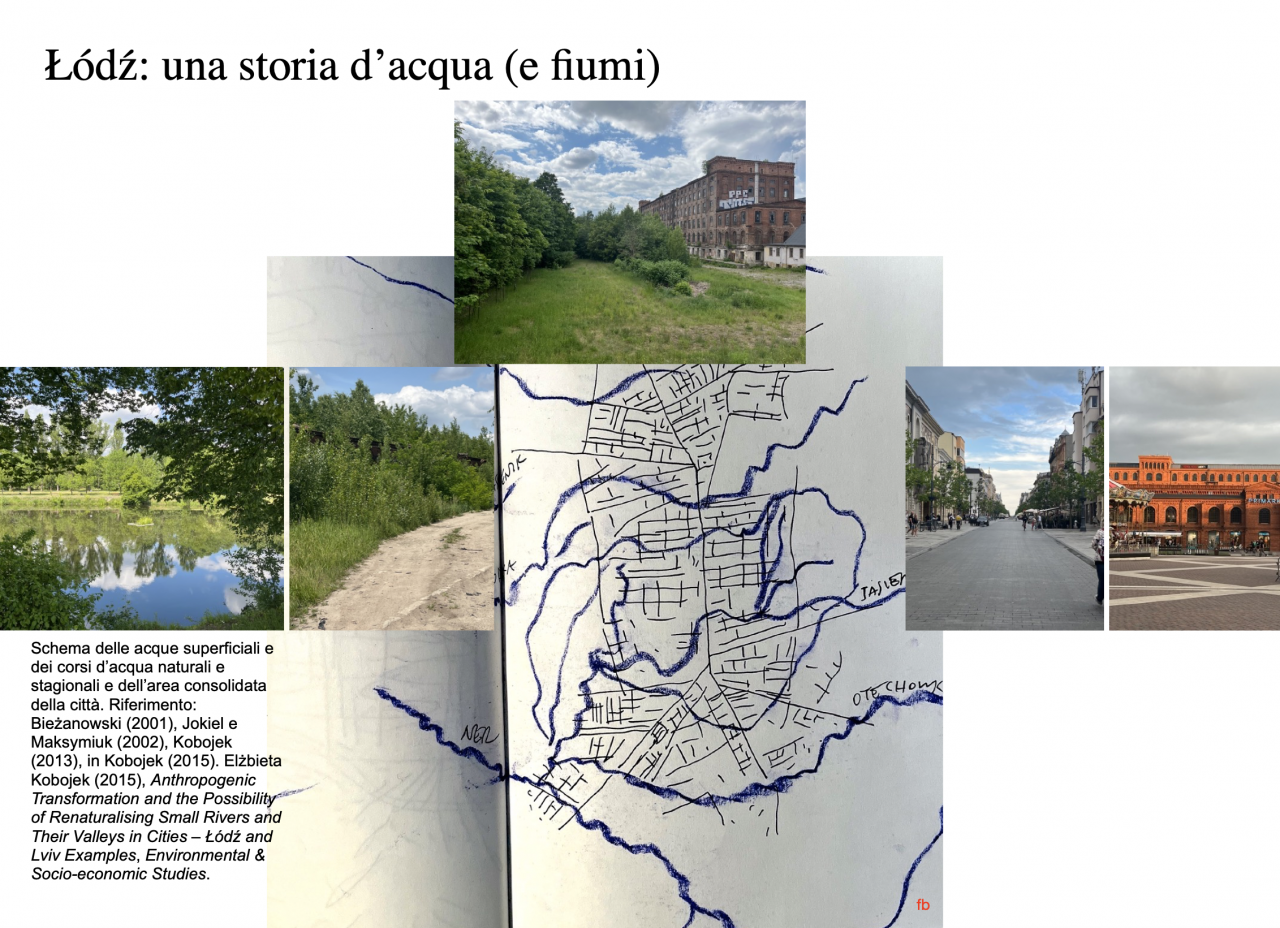
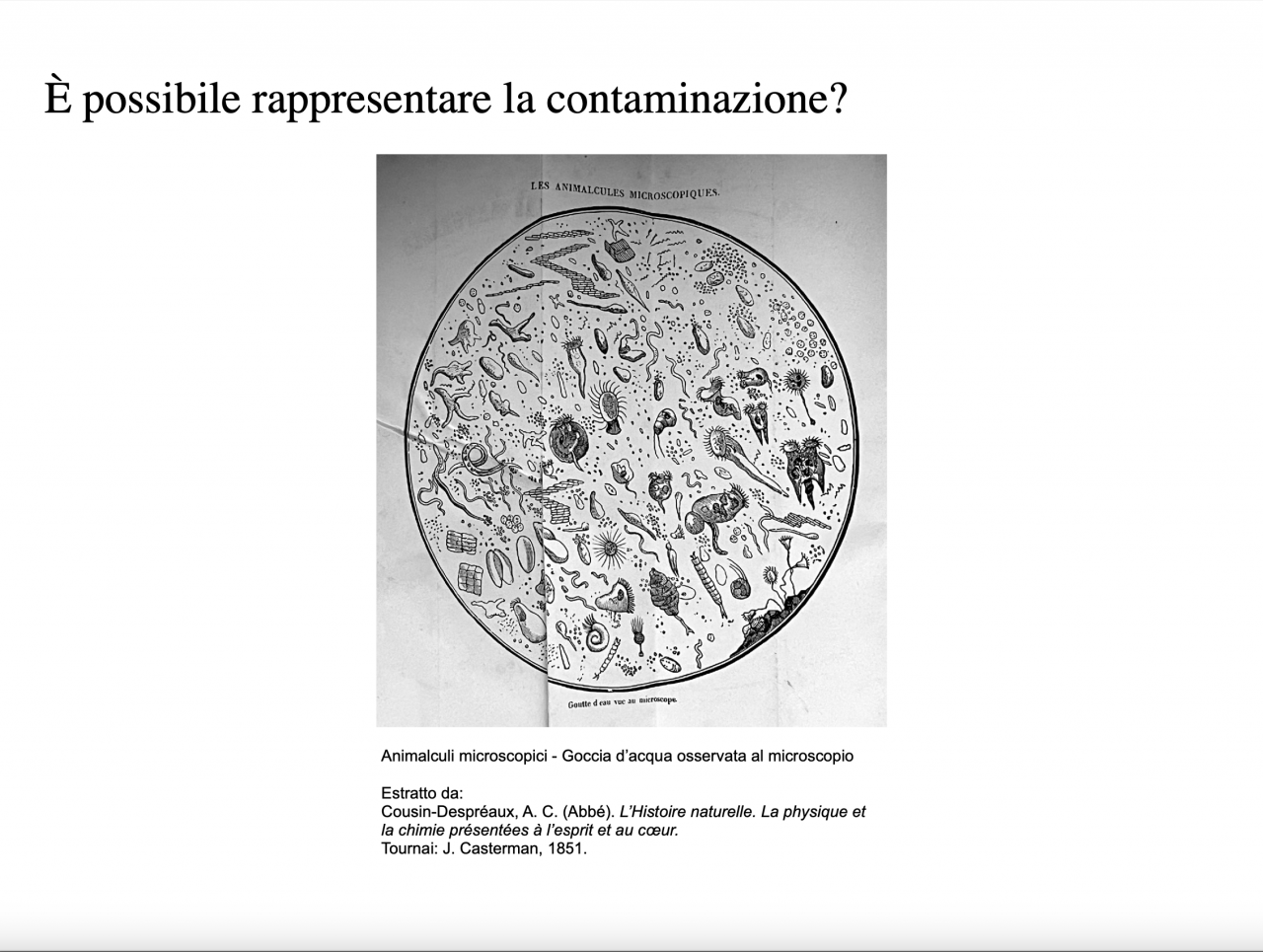
In this context, representation is approached not as a neutral act of depiction, but as a generative device capable of shaping ecological imaginaries and enabling new forms of engagement with landscape transformation.
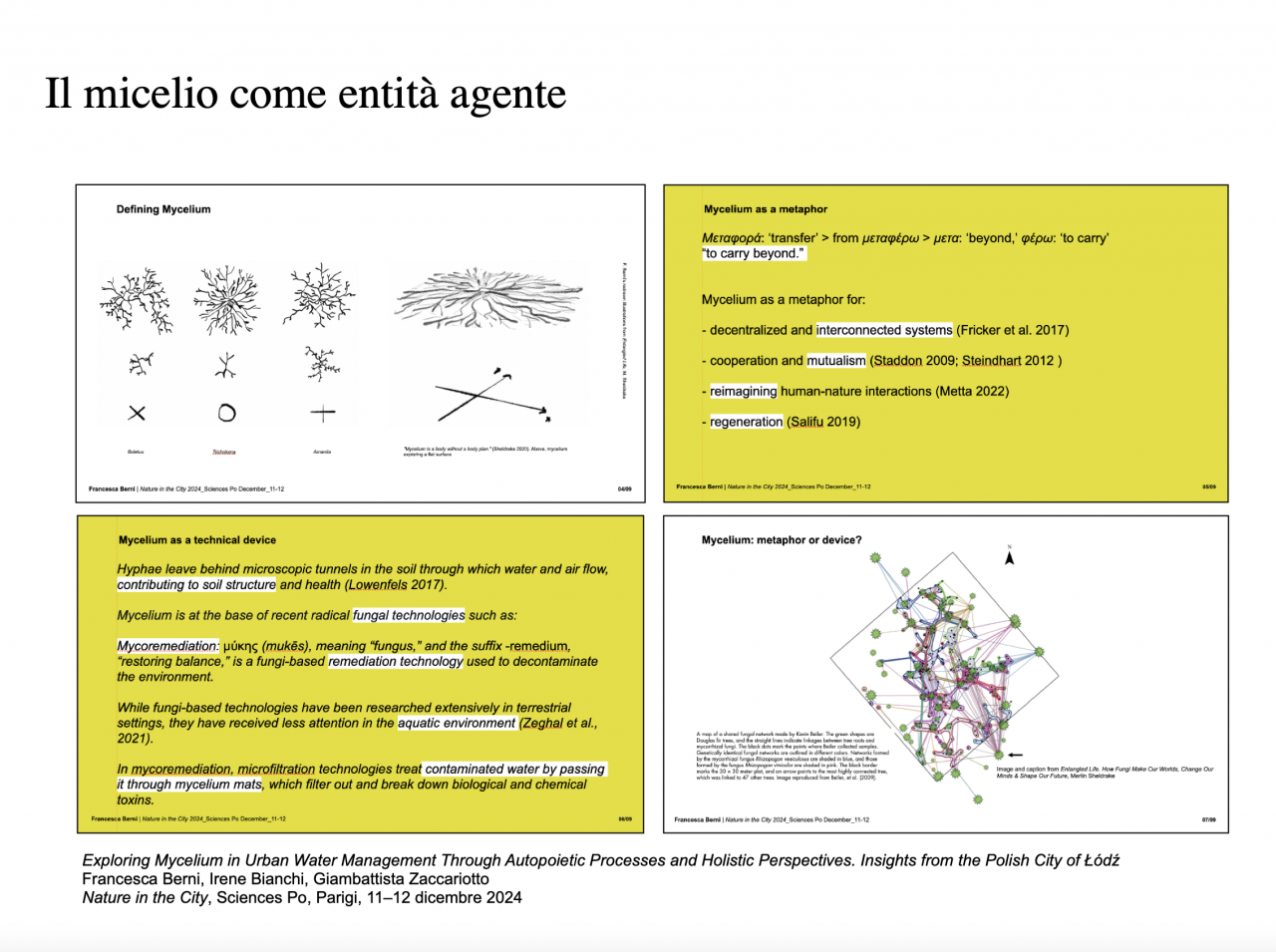
Drawing on the work of Anna Tsing, Władysław Strzemiński and Ursula K. Le Guin, the research explores how different epistemologies and figurative worlds can support the interpretation of such hybrid terrains. These references contribute to rethinking representation as a practice that inhabits contamination, multiplicity, and relationality. Within the PALIMPSEST activities, and particularly through the second residential workshop in Łódź, site-based explorations and co-creative practices have been developed to investigate landscape as a dynamic system.
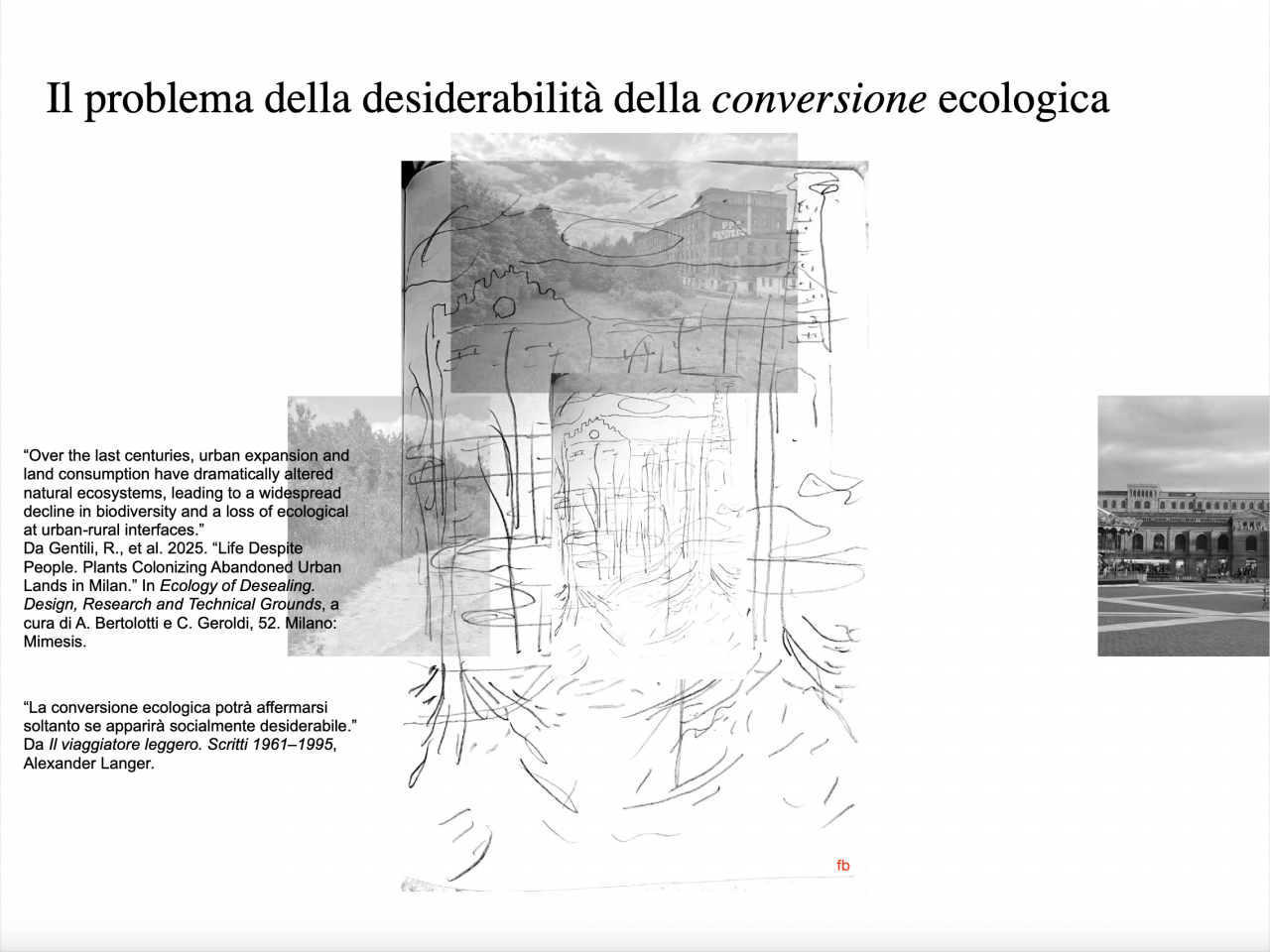
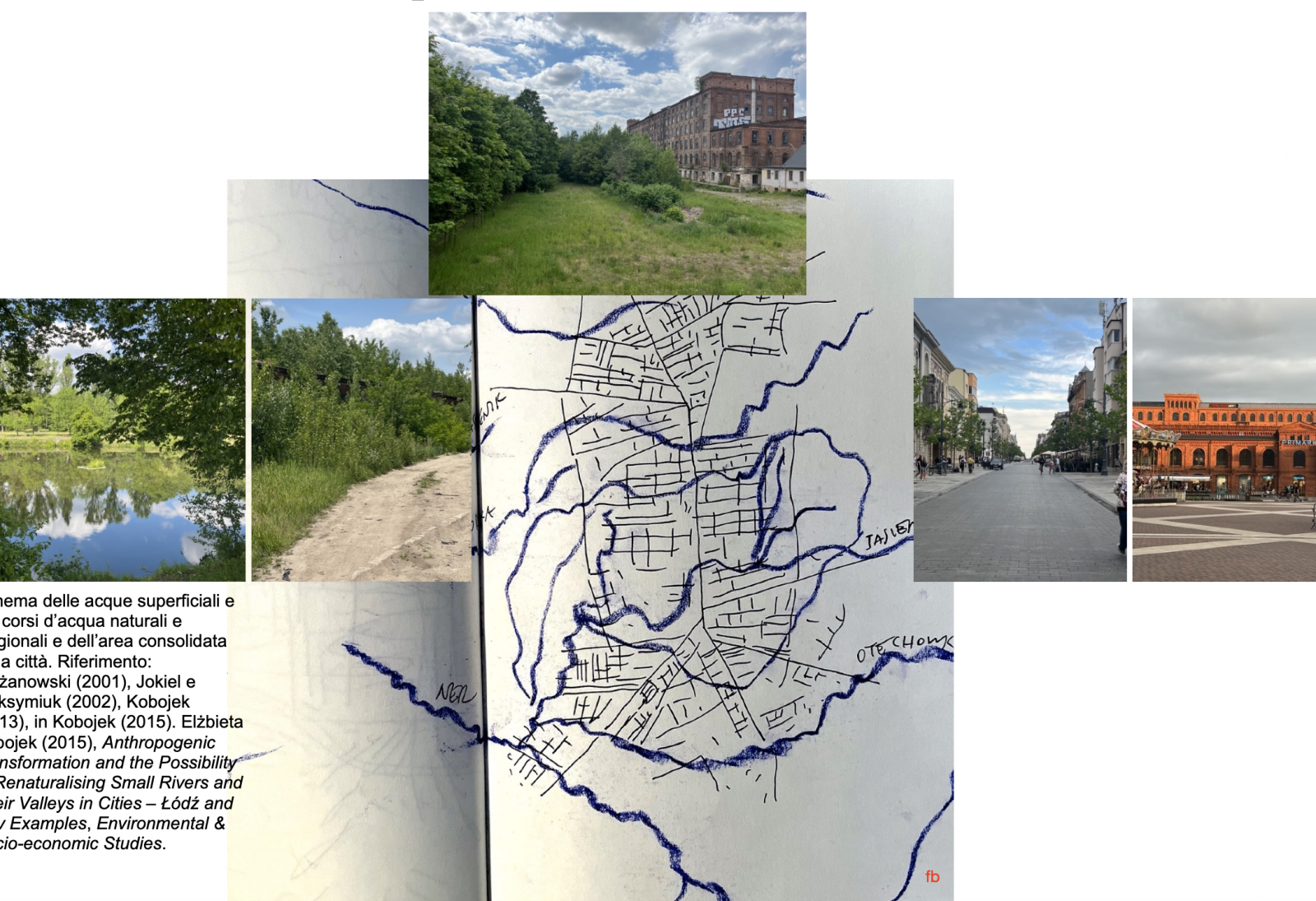
Initial work on mycelium introduced a reticular and autopoietic model of ecological interconnection, acting both as a symbolic and spatial device. In parallel, the meander has been explored as a landscape mechanism capable of articulating processes of water retention, infiltration, and redistribution. Through material experimentation and participatory practices, it emerges as a complementary language, suggesting alternative ways of conceiving the relationship between soil and atmosphere, and opening toward a renewed stratigraphic–atmospheric continuum. This perspective also entails a critical reflection on dominant models of post-industrial regeneration. In Łódź, the conversion of former factories into consumption-driven spaces often results in soil sealing, reducing permeability and exacerbating hydrological risks. In contrast, the research aligns with PALIMPSEST’s approach in reactivating the “lost sustainability wisdom” embedded in landscapes, promoting processes that enhance permeability and ecological co-agency.
Ultimately, the contribution addresses representation as a political and imaginative practice. Echoing Alexander Langer, it suggests that ecological transition must also become desirable. In this sense, the work points toward a broader notion of care – care for the city, for soils, and for landscape – as a situated and collective practice through which ecological transition can be grounded, experienced, and shared.