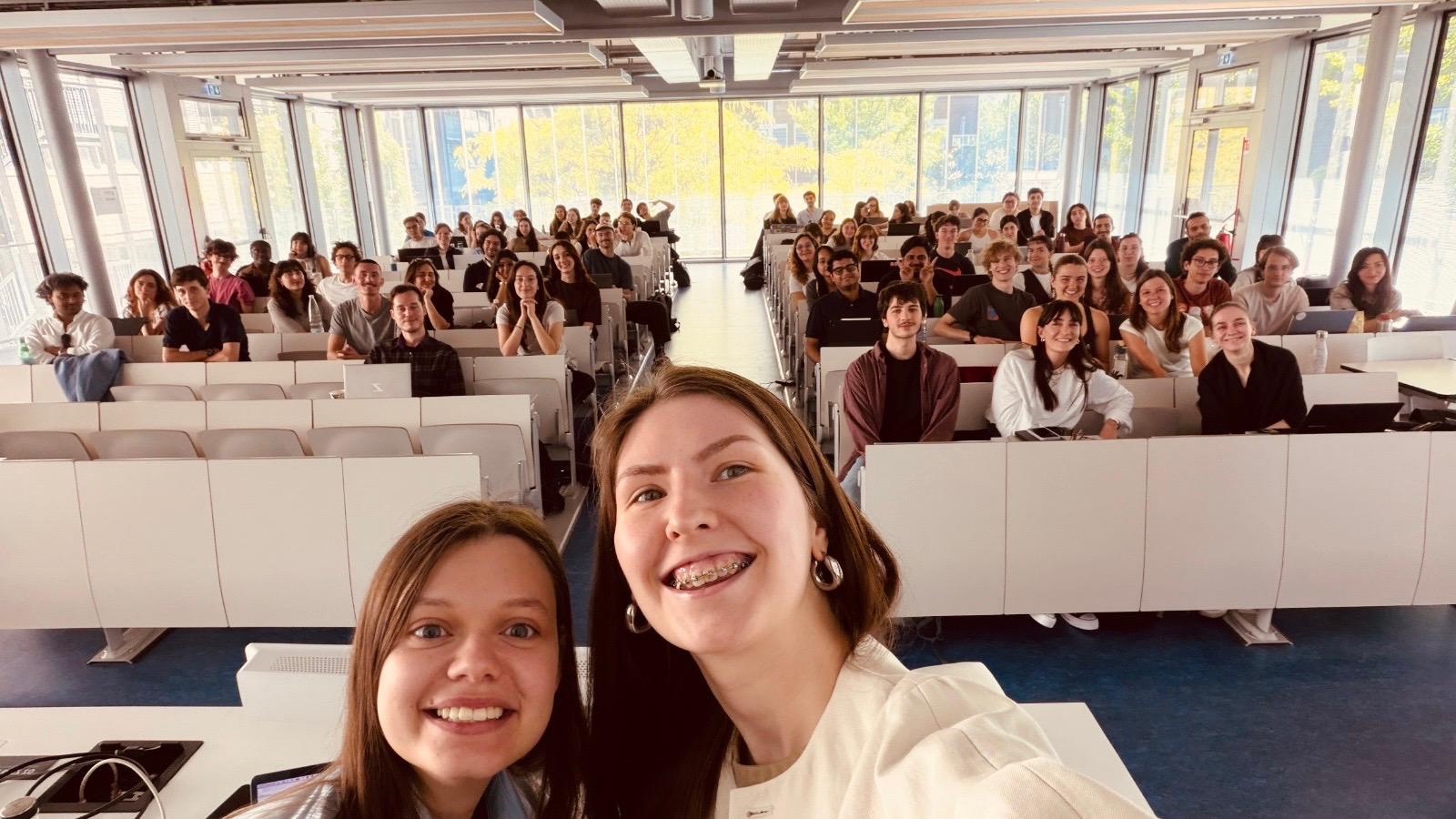
Seminar on recovery planning with Restart Agency
Envisioning Translocality
Enabling Institutions
Enforcing Practices
What does it mean to plan for reconstruction in the midst of a conflict? To what extent can planning serve as a compass in conditions of radical uncertainty and help us “strategically navigate” in the face of evolving conflict dynamics? How is the relationship between long-term perspectives and operational needs discussed and continuously (re)defined?
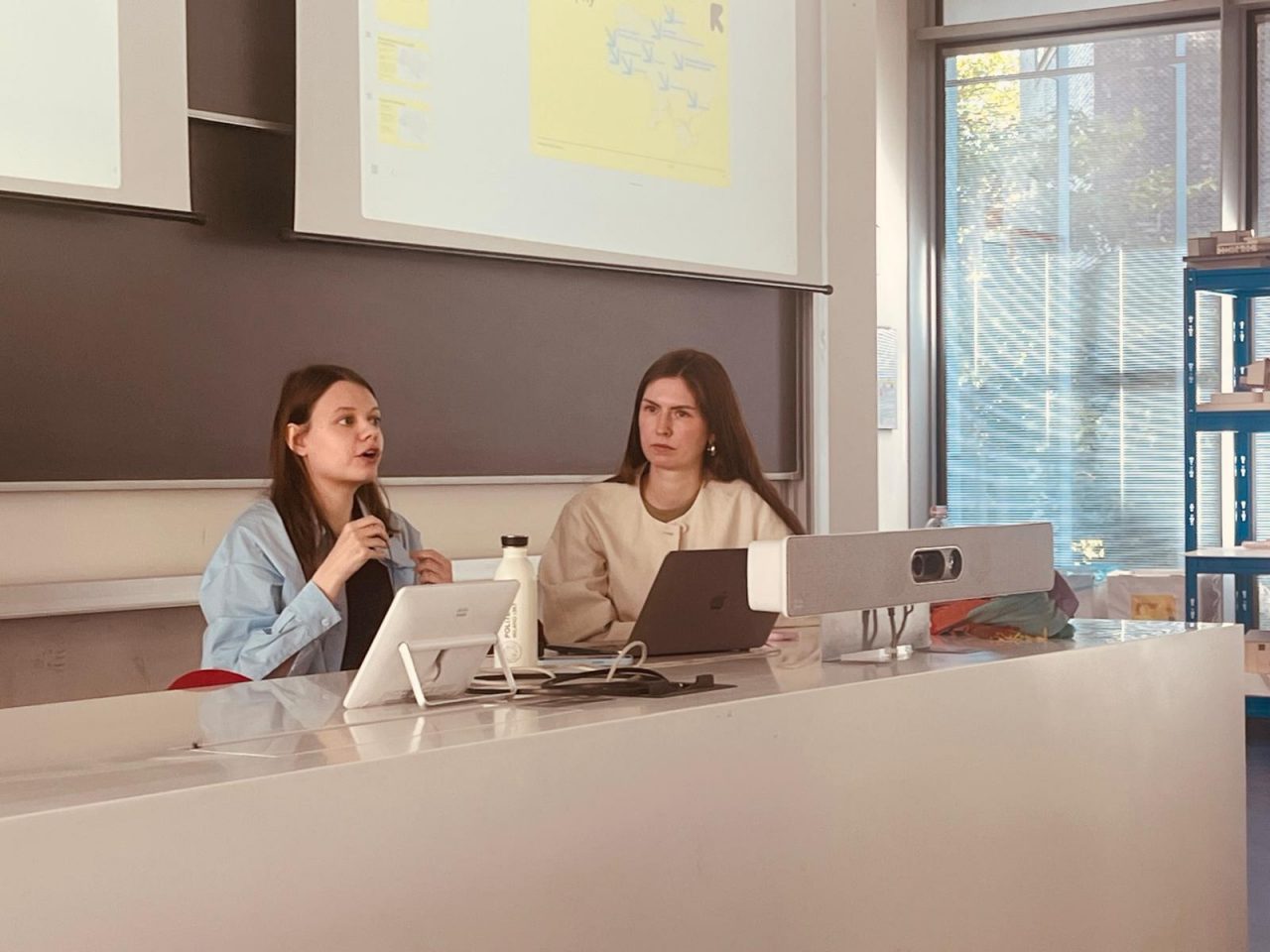
These are just some of the questions we had the pleasure of discussing last week with Marharyta Borysova and Anastasiia Popovych from Restart Urban Agency, during a two-part event focused on dialogue and reflection on the challenges of recovery planning in the Ukrainian context.
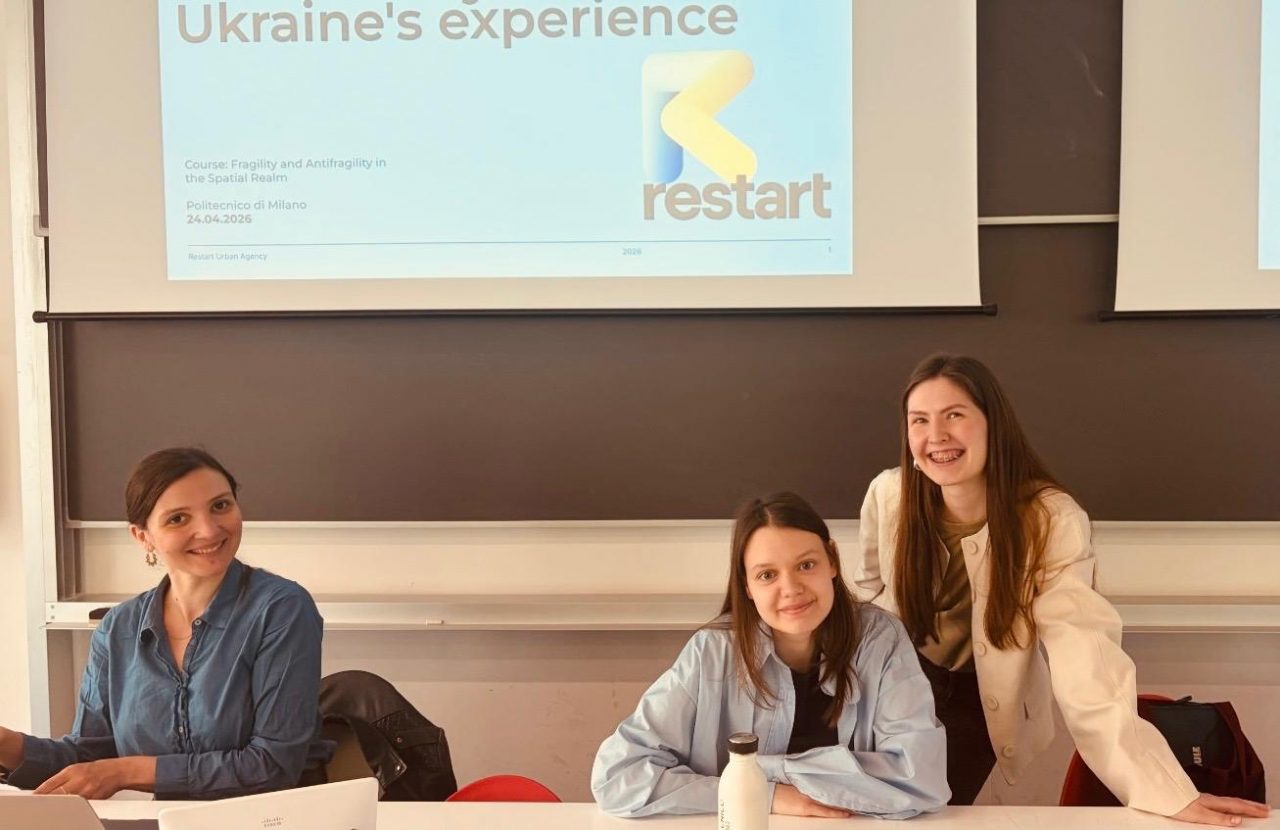
In the morning, our guests delivered a lecture titled “Planning under High Uncertainty: The Ukraine Experience” as part of the course “Fragility and Anti-Fragility in the Spatial Realm,” by Valeria Fedeli within the Master’s program Urban Planning and Policy Design.
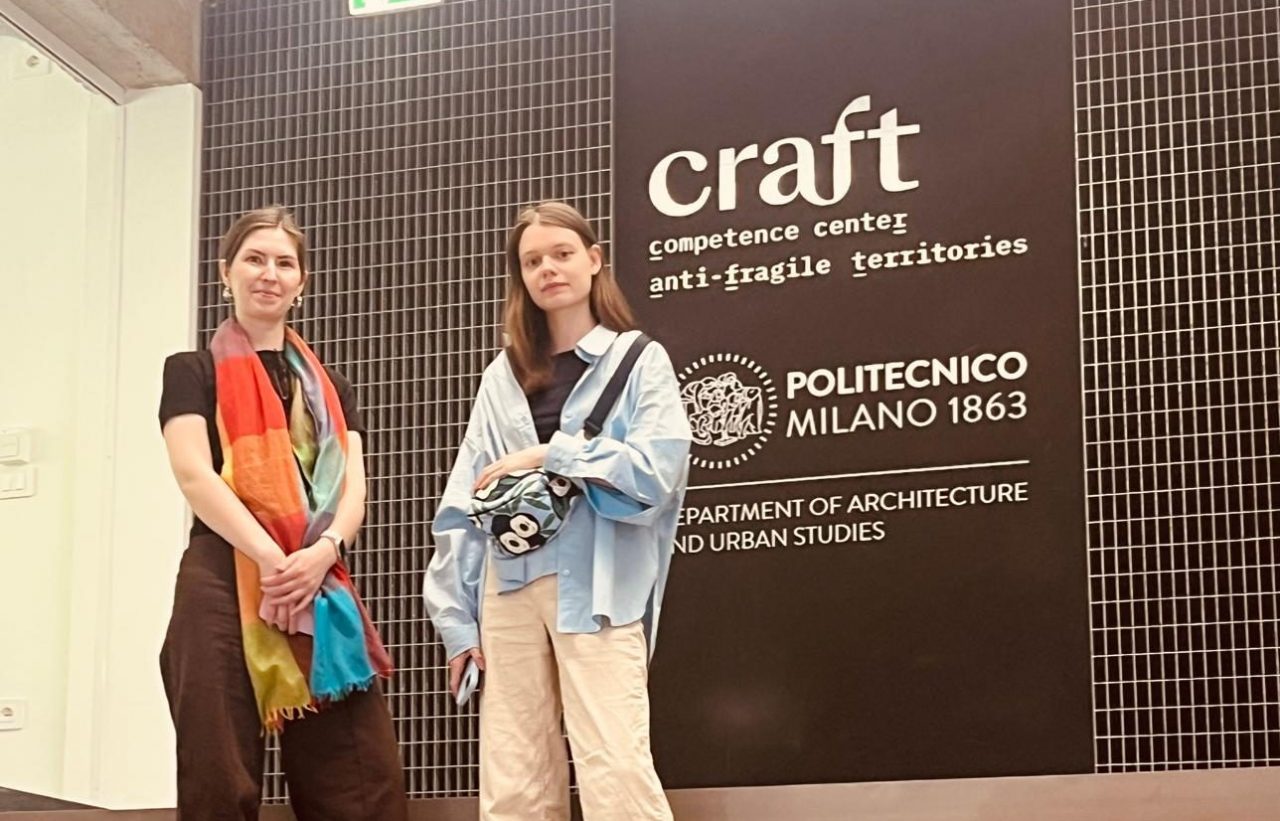
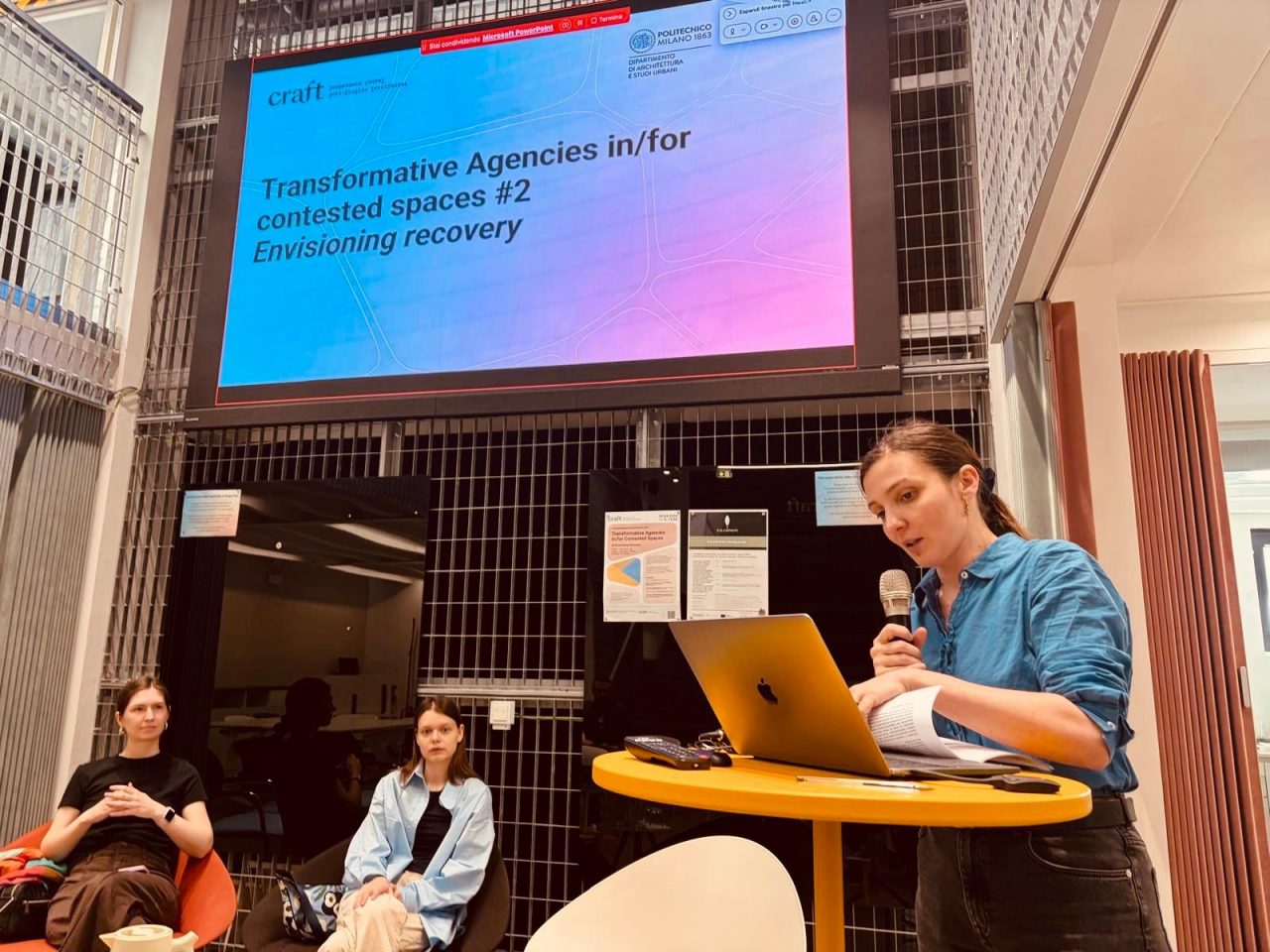
In the afternoon, Marharyta and Anastasiia led a seminar on “Envisioning Recovery” as part of the seminar series “Transformative Agencies in/for Contested Spaces,” curated by Irene Bianchi, Maryam Karimi, and Alice Buoli under the umbrella of the OPEN FORUM initiatives by CRAFT (Competence Center for Anti-Fragile Territories).
In addition to discussing theoretical and operational challenges related to defining planning strategies and actions in a constantly evolving context, the seminar also provided an opportunity to reflect on key elements, including:
- the role of Comprehensive Recovery Programmes (CRP) as integrative tools addressing both war-related impacts and pre-existing territorial vulnerabilities;
- the need to structure planning across multiple temporal scales (long-term visions, medium-term objectives, short-term actions) under conditions of radical uncertainty;
- the shift from isolated projects to coordinated strategic initiatives and the associated challenges of prioritisation in contexts of financial volatility, resource constraints, and demographic change;
- and the importance of multi-scalar governance and participatory approaches, with particular attention to vulnerable groups such as internally displaced persons and veterans, as well as to constraints related to local capacity and institutional fragmentation.
A special thank you to Viktoriia Baltser (Municipality of Voznesensk) and Kateryna Pisotska (Municipality of Vinnytsia) – who joined online – for sharing their on-the-ground experience.
Thanks to Barbara Piga, Nicola Colaninno, Anna Hoblyk, and Arxhenda Lipovica, from DAStU, for participating in the discussion!