IFe Civic Lab: research, teaching and local action
Envisioning Translocality
Enabling Institutions
Enforcing Practices
Knowledge exchange between the university and local stakeholders lies at the heart of the IFe Civic Lab. Over time, this exchange has evolved into increasingly structured forms of collaboration, connecting research and teaching activities with the everyday practices of public institutions, civic organisations and residents across Municipality 9 in Milan.
Within this framework, IFe Civic Lab has progressively developed a range of initiatives that both support and enrich teaching. These activities create opportunities for students to engage directly with ongoing urban transformations and to explore issues related to public space, neighbourhood change and local governance through situated learning experiences. The first-year Urban Planning Studio, master’s theses and curricular internships¹ all contribute to this approach by embedding learning within real contexts and active processes. At the same time, they expand the research capacity of the IFe civic Lab by opening new spaces for design experimentation and broadening the network of actors involved in its activities.
Over the last two academic years, the first-year Urban Planning Studio has been organised around five neighbourhoods within Municipality 9, with each student group focusing on a specific local context. From the initial analytical phase, students engaged with the Space and Change initiative developed by the IFe Civic Lab in 2025, working with participatory materials and interacting with the local organisations that have collaborated with IFe over time. The participatory mapping process (Using simple App as Telegram on the Deliberative Platform “BCAUSE – Reasoning for Change”, Open University) provided a valuable knowledge base, helping students identify locally perceived challenges and opportunities that subsequently informed their design proposals. These proposals were further refined through interviews and discussions with community organisations and local stakeholders.
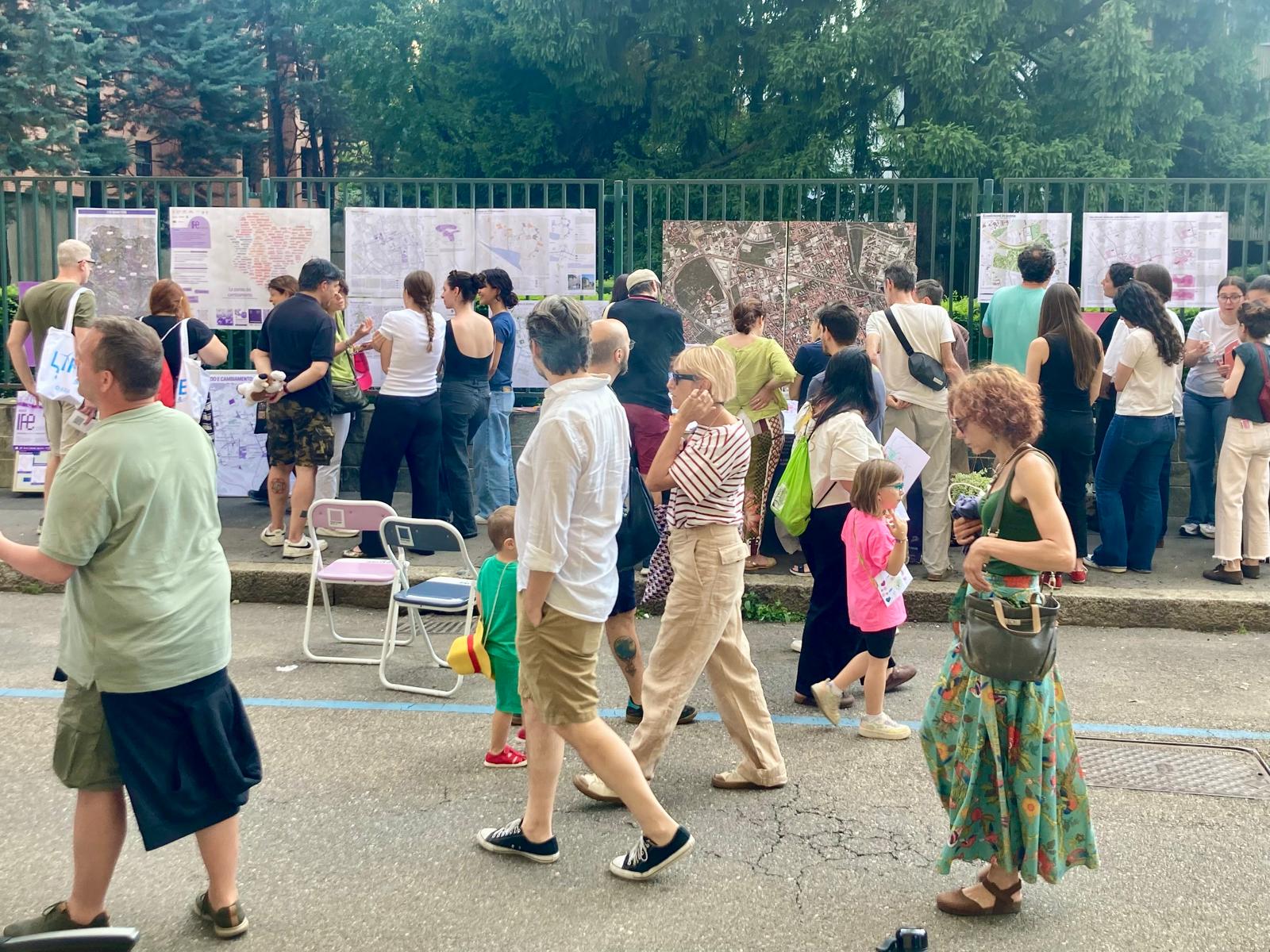
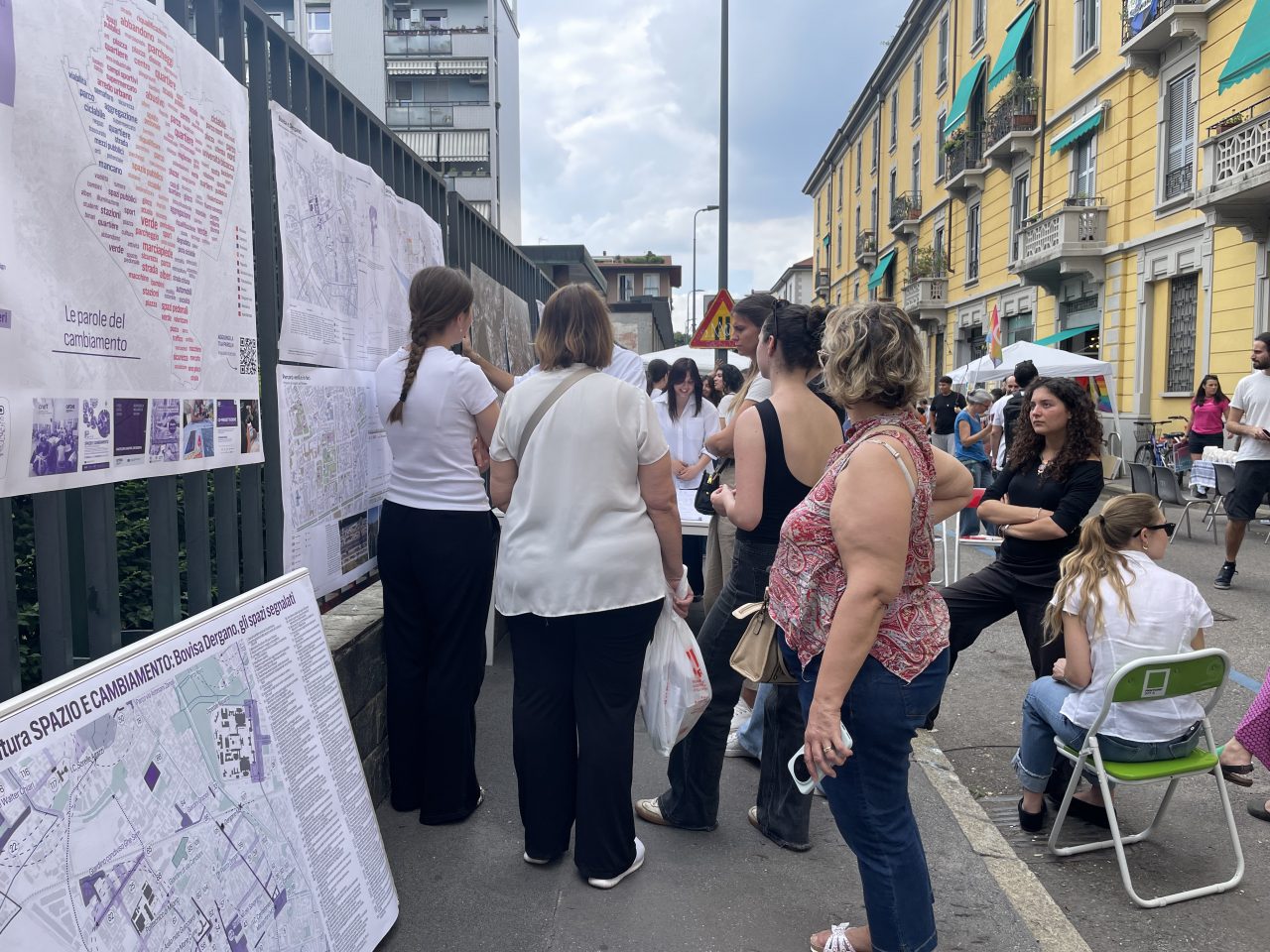
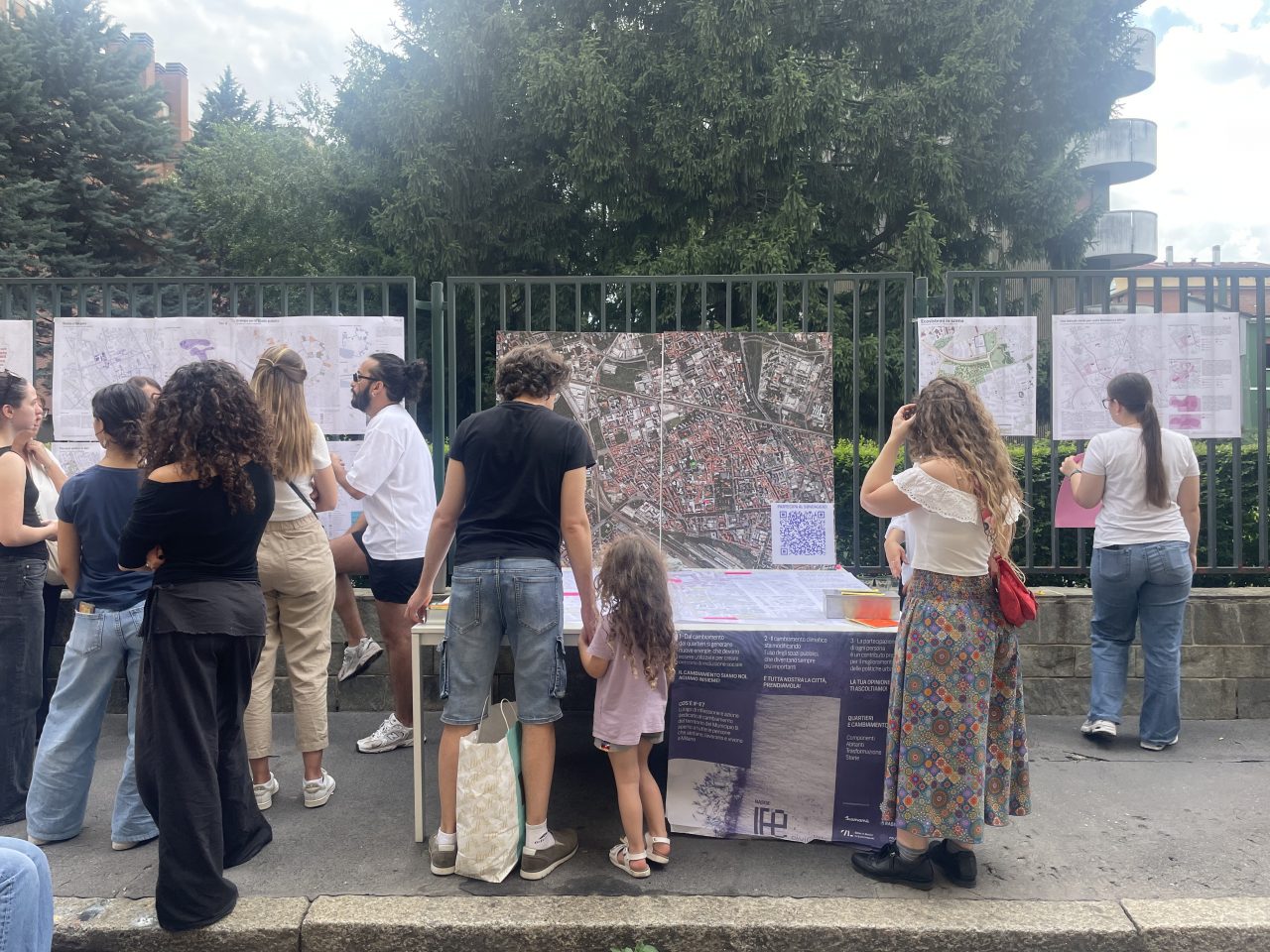
The interaction between research, teaching and civic engagement reached a particularly significant moment during the Via Dolce Via neighbourhood festival, held in Dergano on 6 June 2026. As part of the Space and Change initiative, students presented and discussed their design proposals directly with residents and community organisations, using the festival as an opportunity to test and refine their ideas in dialogue with those who experience these places on a daily basis. At the same event, a master’s thesis project invited participants to contribute through an interactive map and a digital questionnaire exploring three potential intervention areas in the Dergano and Bovisa neighbourhoods, identified through the earlier participatory process.
The festival also marked the public presentation of the preliminary outcomes of the Space and Change initiative. Findings relating to public space, mobility and the urban transformations most frequently identified by residents were shared and discussed collectively. Several of the visual materials exhibited ‒ including thematic maps, visual interpretations of semantic data and analyses of the Municipal Territorial Plan (Piano di Governo del Territorio) concerning green infrastructure and planned urban transformations ‒ were themselves produced with the collaboration of recent curricular internships, further illustrating the integration of research and teaching within the IFe platform.


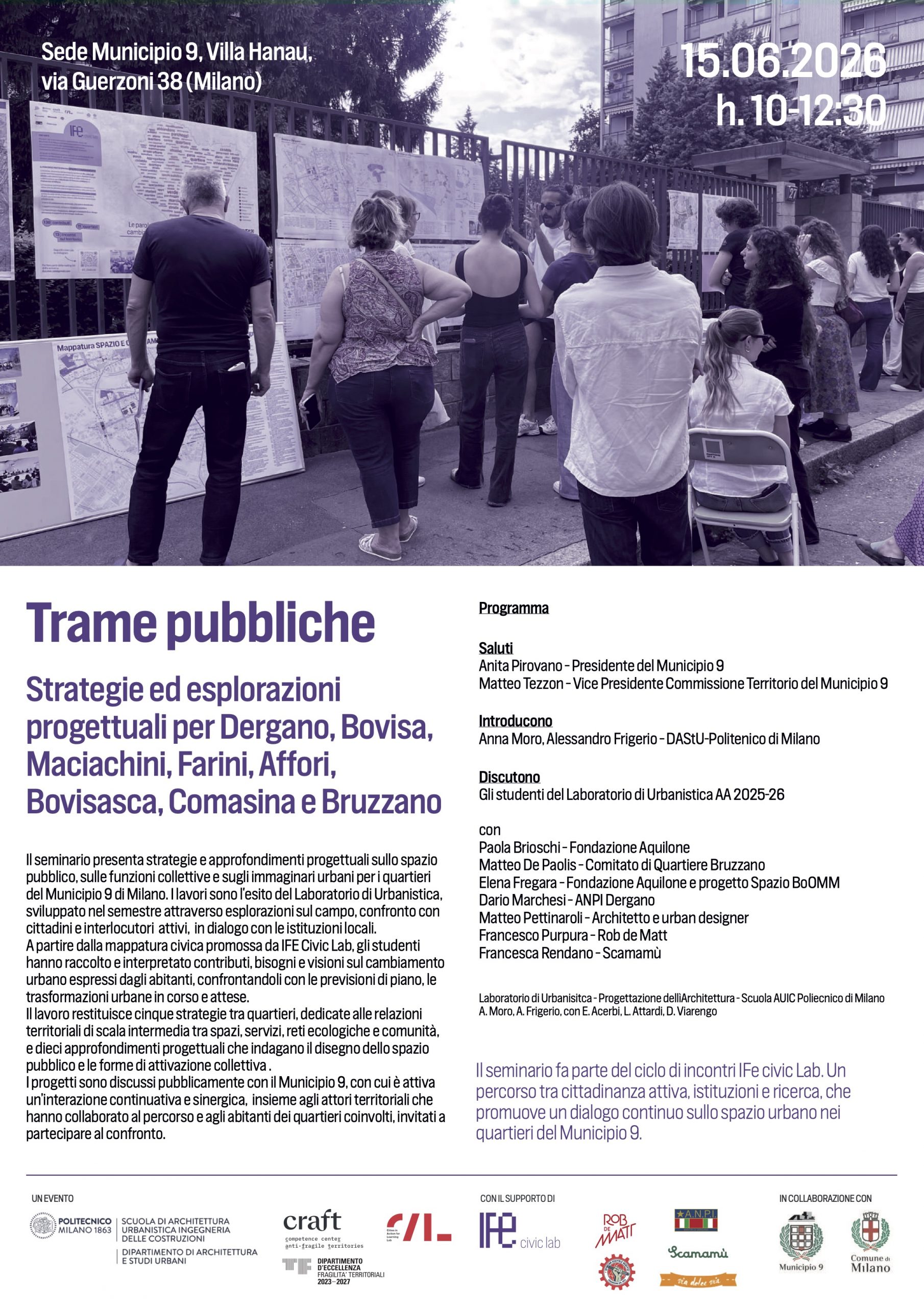
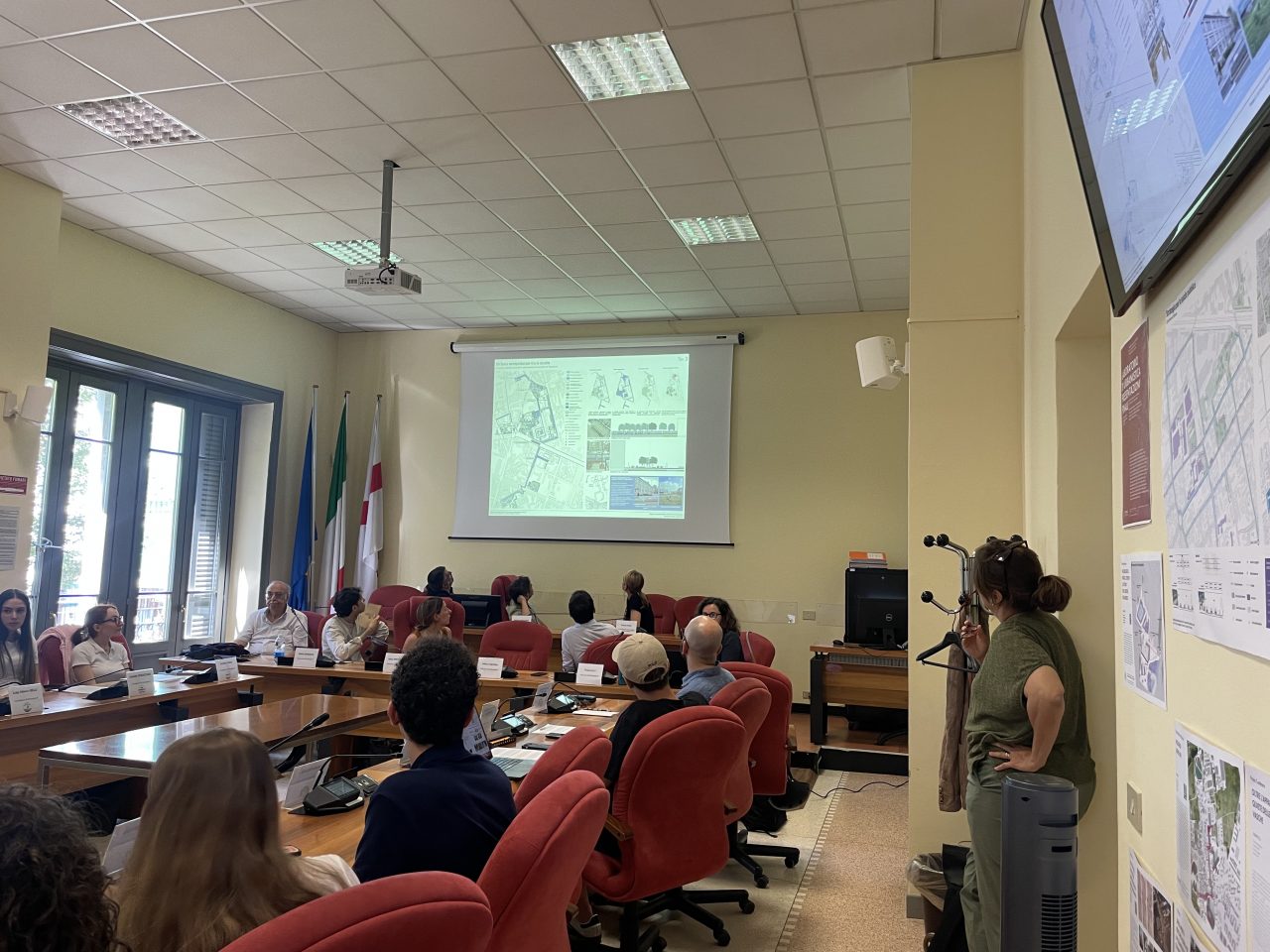
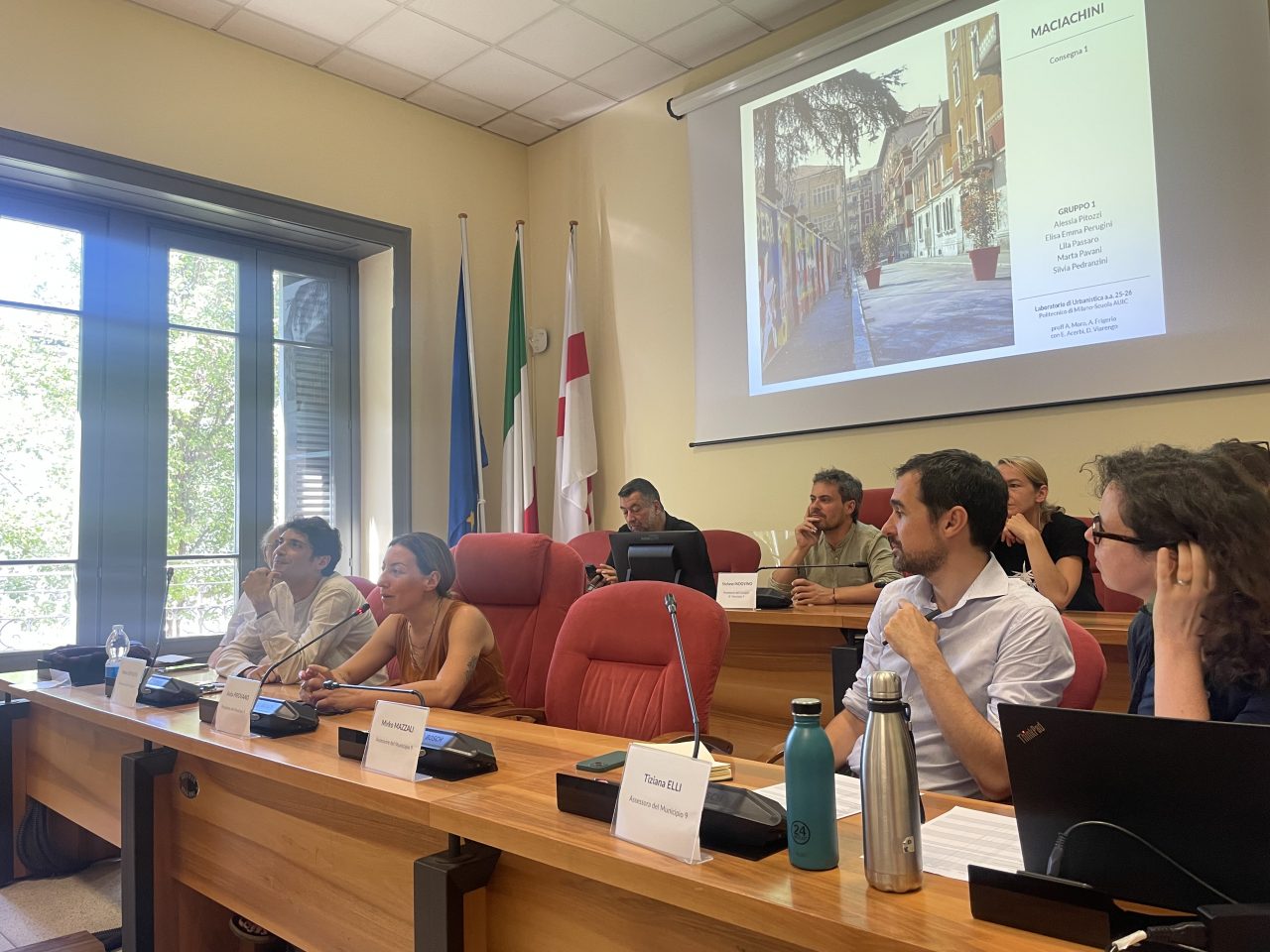
The Urban Planning Studio concluded on 15 June 2026 with a public presentation hosted by Municipality 9 at Villa Hanau. Students presented the outcomes of their work and discussed them with representatives of the local administration, civic organisations and neighbourhood stakeholders, creating a final moment of exchange between academic work and ongoing local initiatives.²
Building on these experiences, further collaborations between the university and the local area are currently in preparation. They aim at the creation of mixed teams of students and researchers working on specific projects dedicated to the different neighbourhoods of Municipality 9, while continuously supporting the research and participatory initiatives promoted by the IFe civic Lab. In this way, the educational value of the proposed research-didactic approach ‒ which interprets the context as a space for learning, experimentation, and dialogue ‒ is reaffirmed.


Notes
1. The teaching staff involved in the 2025/26 Urban Planning Studio included Professors Anna Moro and Alessandro Frigerio, with tutors Elena Acerbi (postdoctoral researcher at the IFe Research Lab), Luca Attardi, and Daniele Viarengo. The master’s thesis currently in progress is by Lisa Maria Iotcu. Curricular internships were carried out by Lisa Maria Iotcu (December 2025–February 2026), Matteo Monchiero, and Caterina Podestà (March–May 2026).
2. The final presentation was attended by, and included discussions with, Anita Pirovano (President of Municipality 9-Comune di Milano), Matteo Tezzon (Vice-President of the Municipality 9 Territorial Planning Commission), Dario Marchesi (President of ANPI Dergano), Elena Fregara (Fondazione Aquilone and the Spazio BoOMM project), Paola Brioschi (Fondazione Aquilone), Matteo Pettinaroli (Needle Agopuntura Urbana and Brand for the City), Francesco Purpura (Rob de Matt), and Francesca Rendano (Scamamù and Via Dolce Via).
Reference
Dorato, E., Moro, A., & Terracciano, A. (2026). Sul territorio. I ruoli sociali del laboratorio di Urbanistica. In M. Russo & M. Simioli (Eds.), Intersezioni. La formazione urbanistica di fronte ai mutamenti – Laboratori (pp. 27–37). Naples: FedOA – Federico II University Press. Open Access. DOI: 10.6093/978-88-6887-401-8. Available at: FedOA Books