Echoes of Separation, Recognition, and Co-existence
Envisioning Translocality
Enabling Institutions
Enforcing Practices
Reframing migration as a process, through photography and storytelling
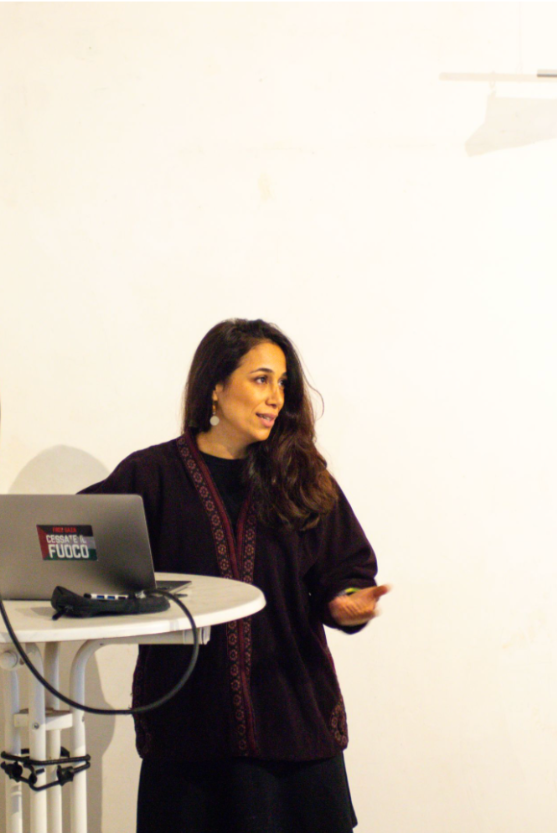
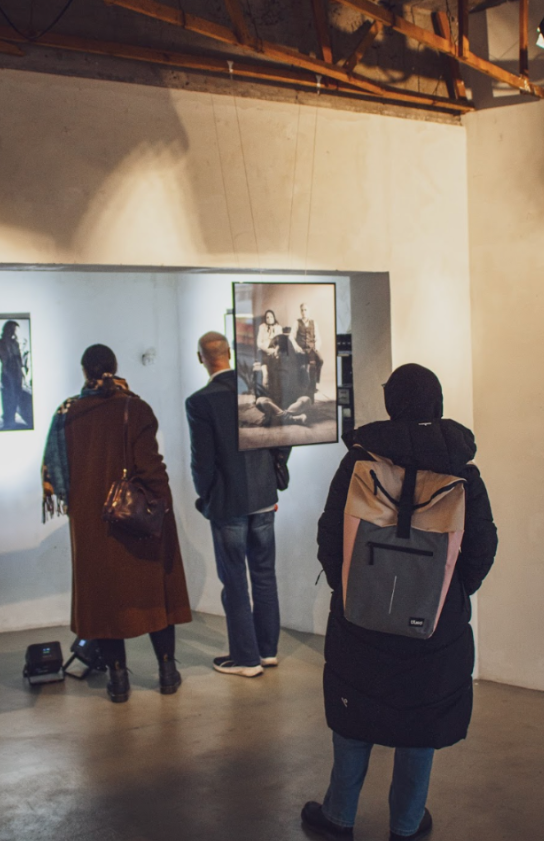
Earlier this month, Maryam Karimi participated in the opening of the photographic exhibition “Echoes of Separation, Recognition, and Co-existence” at Unterhaus Galerie in Oberhausen, Germany.
In her keynote lecture, “Rethinking Migration Beyond Otherness,” she invited the audience to consider migration not as a crisis or exception, but as a universal dimension of human life. Drawing on historical moments and archival photographs of European immigrants arriving in the United States, she examined how mobility was once framed as opportunity, ambition, and hope, rather than as a burden or threat. Her talk invited reflection on how contemporary narratives shape perceptions of migration and belonging.
The Exhibition
“Echoes of Separation, Recognition, and Co-existence” is a curatorial project based on a photographic series by Marjan Hasoumi, spanning from 2014 to the present. It addresses migration as a moment of physical displacement and focuses in particular on decision-making within migratory trajectories.
Curated by Marjan Hasoumi, the exhibition explores themes of choice, memory, loss, transformation, resilience, and renewal across three interconnected artistic formats. In addition to photography, it incorporates naqqāli (traditional Iranian storytelling) by Asal Alinejad and research-based reflections by Maryam Karimi. Drawing on their backgrounds in architecture and product design, urban planning, illustration, and performance, the three of them approach migration as a complex system that requires observation, reframing, analysis, and reconstruction rather than mere representation. The project foregrounds migrants as active agents and highlights how they shape and contribute to the societies in which they live. It offers emotional, political, and everyday perspectives on migration and underscores the importance of understanding it as an ongoing process.
We are proud of this collaboration, which reflects Maryam Karimi and CALL’s ongoing engagement with interdisciplinary approaches to migration, bringing together academic reflection, visual practice, and narrative traditions.

👀 You can also watch the opening video here