PALIMPSEST at the SONE Final Event
Envisioning Translocality
Enabling Institutions
Enforcing Practices
Transdisciplinary Practices at the Intersection of Art, Landscape, and Climate Research
At the end of the year, the PALIMPSEST Coordination Team travelled to Jerez de la Frontera to participate in the final event of the SONE project (Songs of Nearby Earth / Cantos de la Tierra Cercana). Conceived as a single, articulated event, the programme combined an exhibition with a collective performative moment, bringing together three years of transdisciplinary research and collaboration.
SONE originated from the artistic proposal of Estelle Jullian (Culturama), with curatorial support from our Partners Nomad Garden. The project approaches the territory and landscape of Jerez de la Frontera through artistic and design practices that integrate popular knowledge, landscape-based practices, and local cultural expressions. Ceramics, viticulture, and cante are mobilised alongside emblematic practices such as emparrados (wine arbors) and the ritual of the zambomba, opening spaces for reflection on shared challenges including climate adaptation, energy transition, and landscape transformation.
The exhibition, developed in collaboration with the Municipality of Jerez, constituted the first moment of the event. It brought together images, maps, diagrams, sketches, and material experiments that documented the long-term co-creation process underpinning the project. It made visible the dense ecosystem of local actors and expertise that enabled PALIMPSEST and SONE to build durable, place-based, and transdisciplinary relations over time.
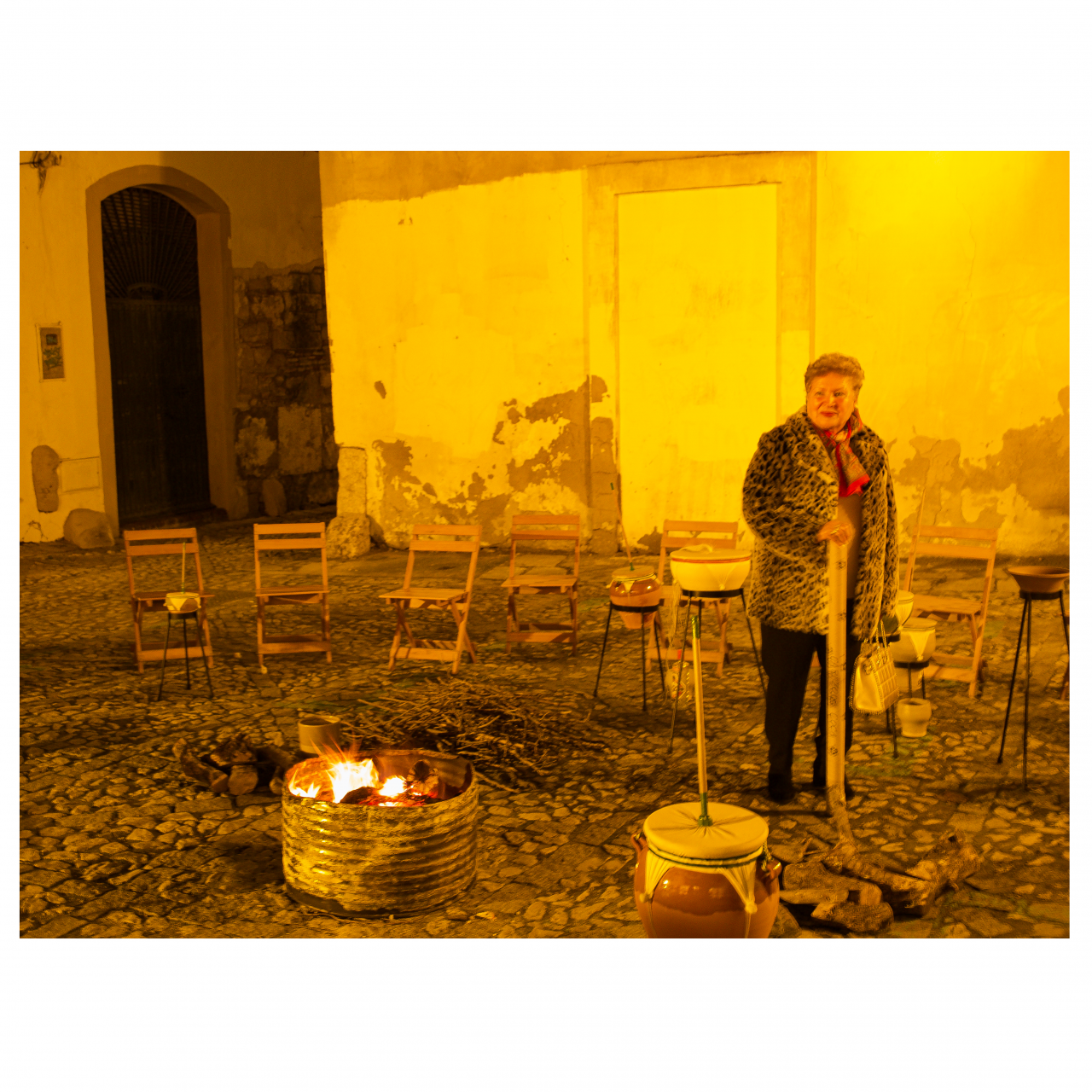
Central to this process was the collective development of the zambomba (a traditional musical instrument) as a research object, shaped through contributions from art, ceramic production, glaze experimentation, geology and enology, pruning and viticulture practices, urban vegetation studies, metalwork, music, and historical research.
A significant research strand concerned the reinterpretation of the traditional songbook, developed by Claudia GR Moneo, Lucía Franco, and Belenish Moreno-Gil, in order to embed narratives related to environmental and climate challenges. Further experimentation focused on the use of emparrados as a nature-based solution for shading and microclimate regulation in a territory increasingly exposed to heat waves, and the design of a related monitoring system. These material and spatial investigations were complemented by BADX (Before and After Dry Xérès), a musical composition by Belenish Moreno-Gil in collaboration with Oscar Escudero, which translated landscape transformation and climate stress into a sonic research output.
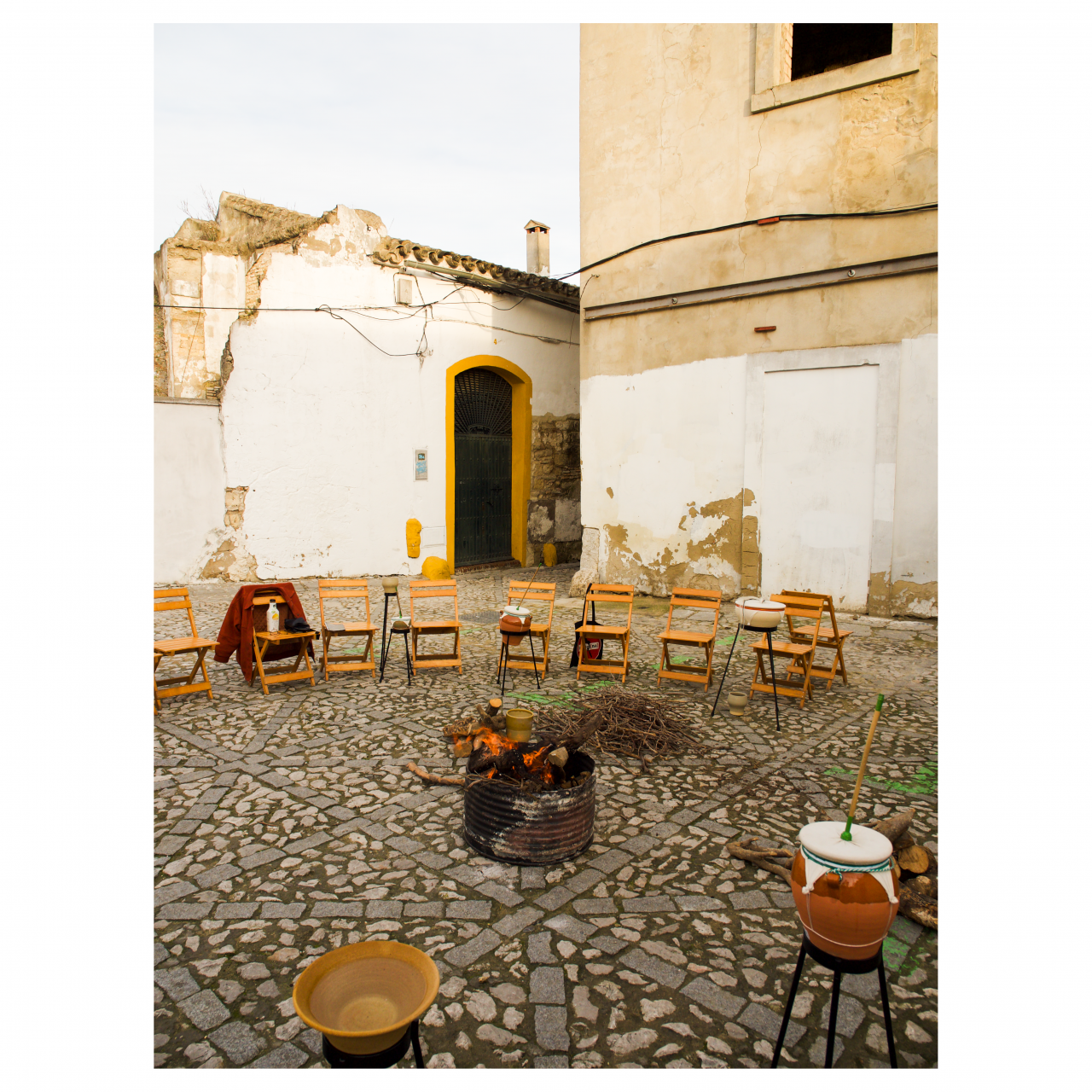
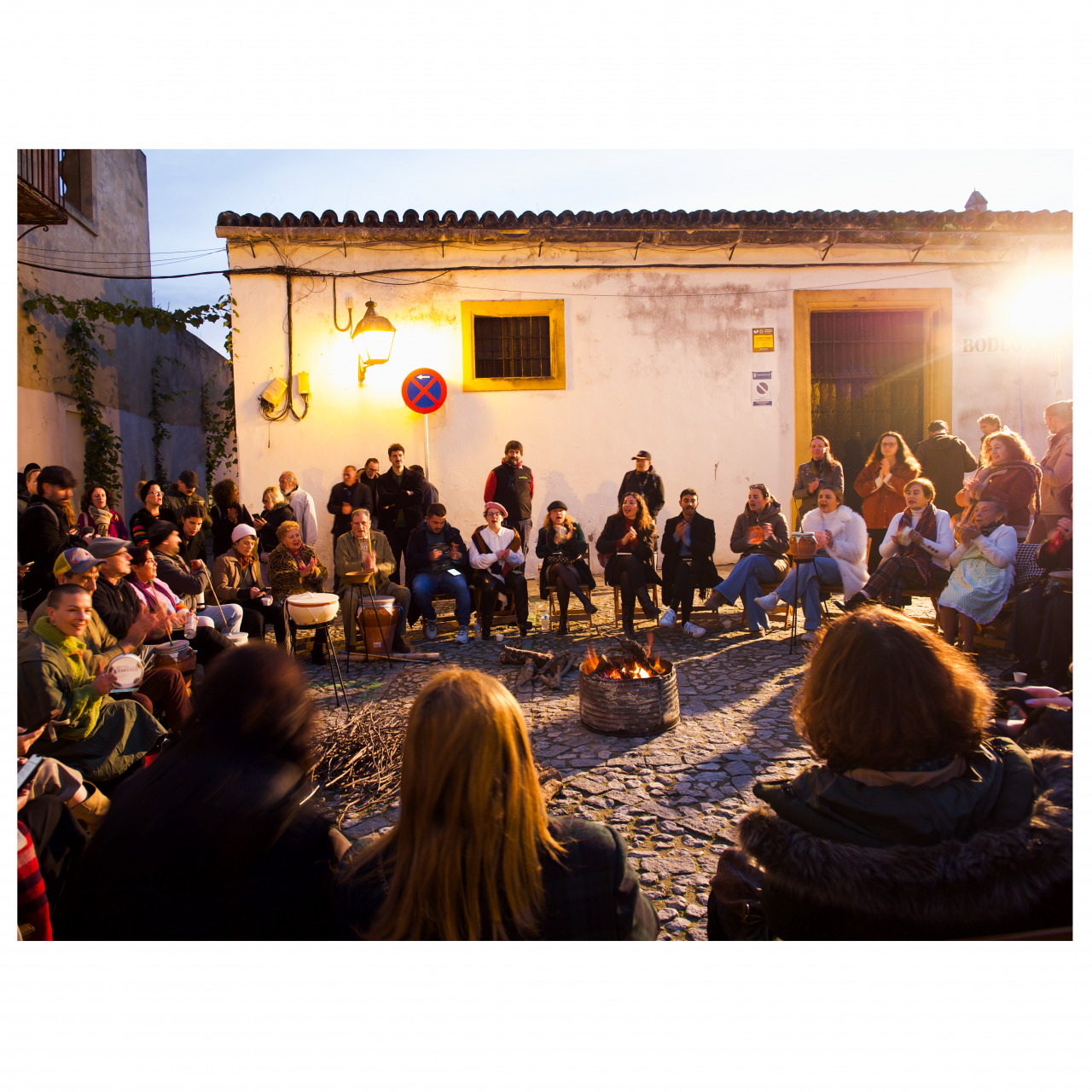
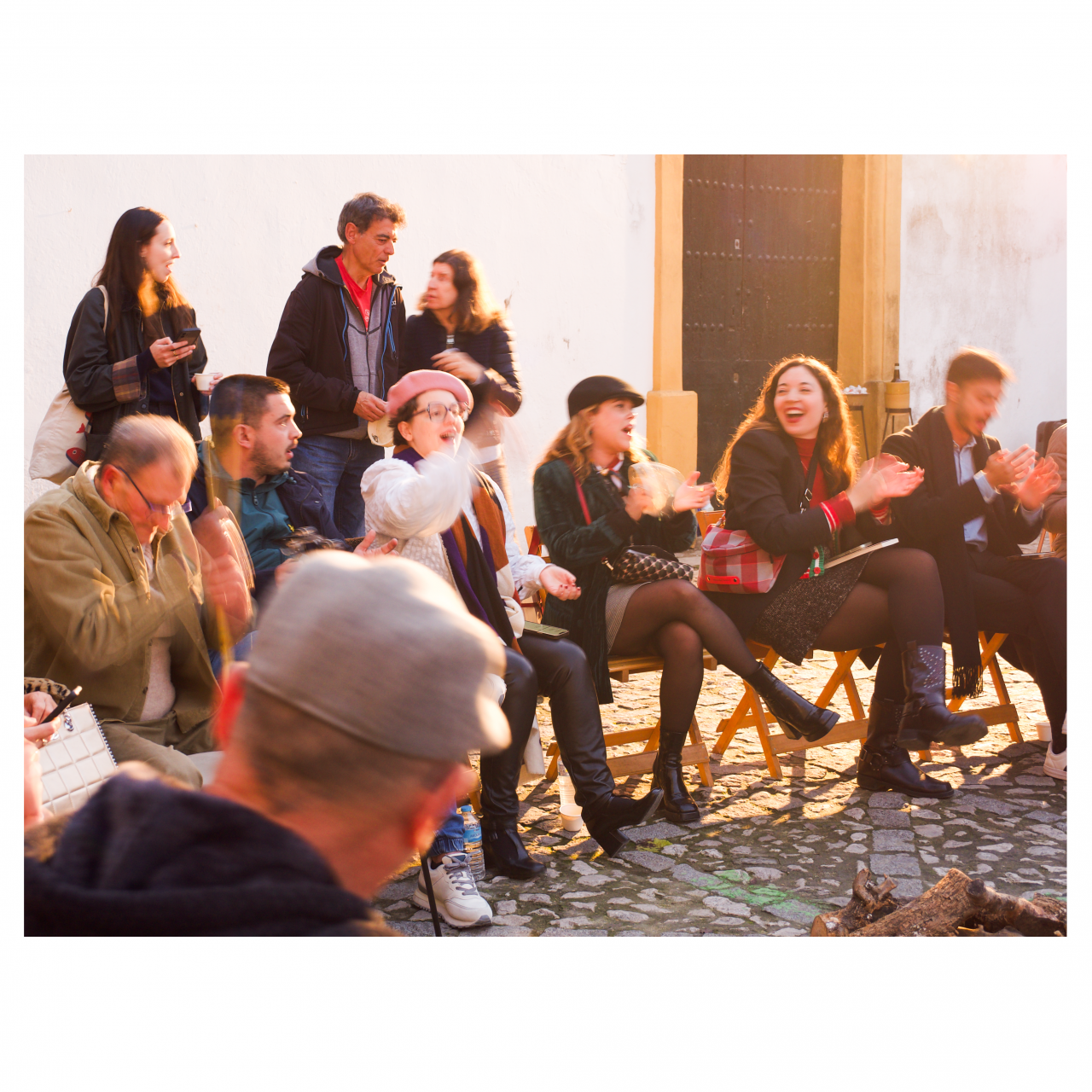
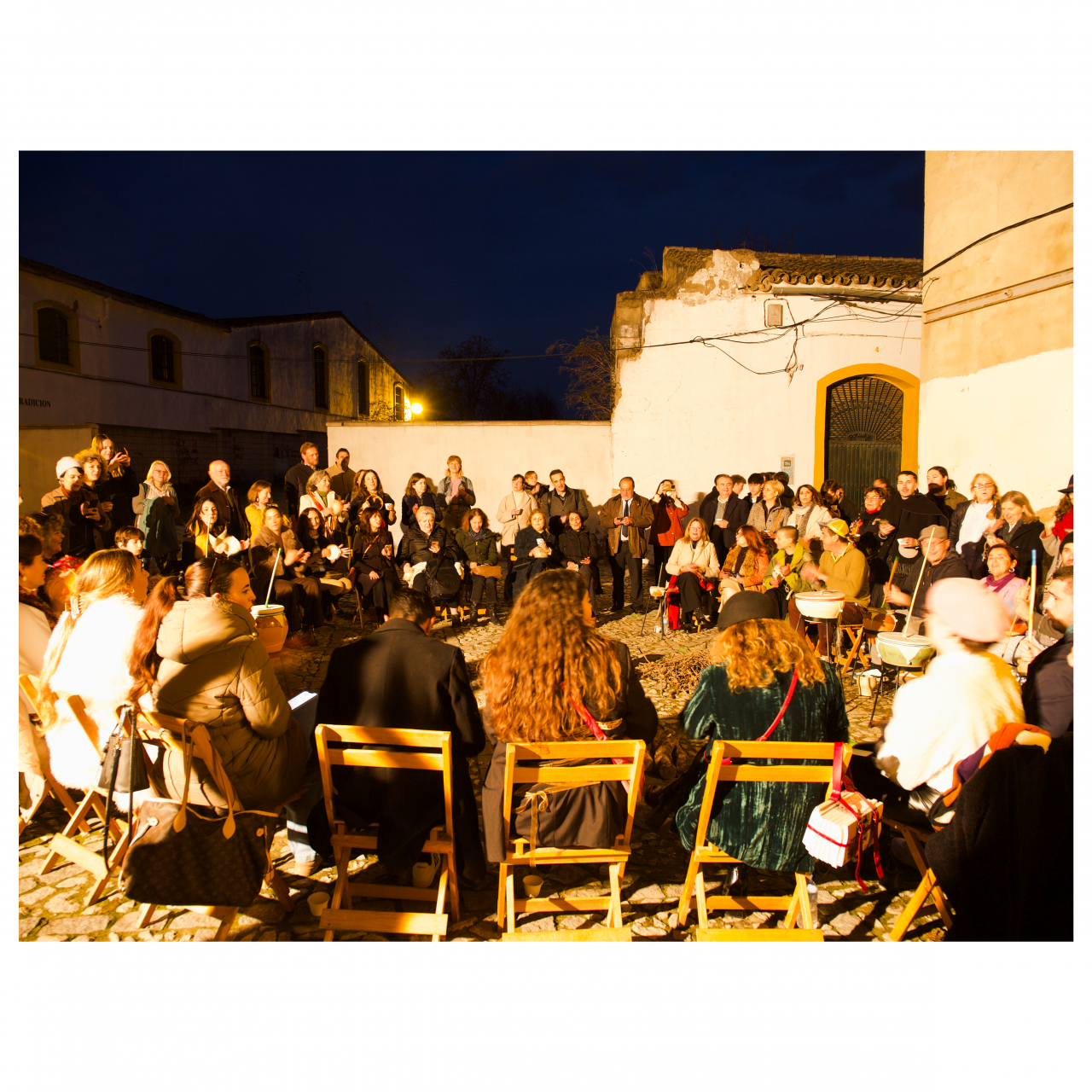
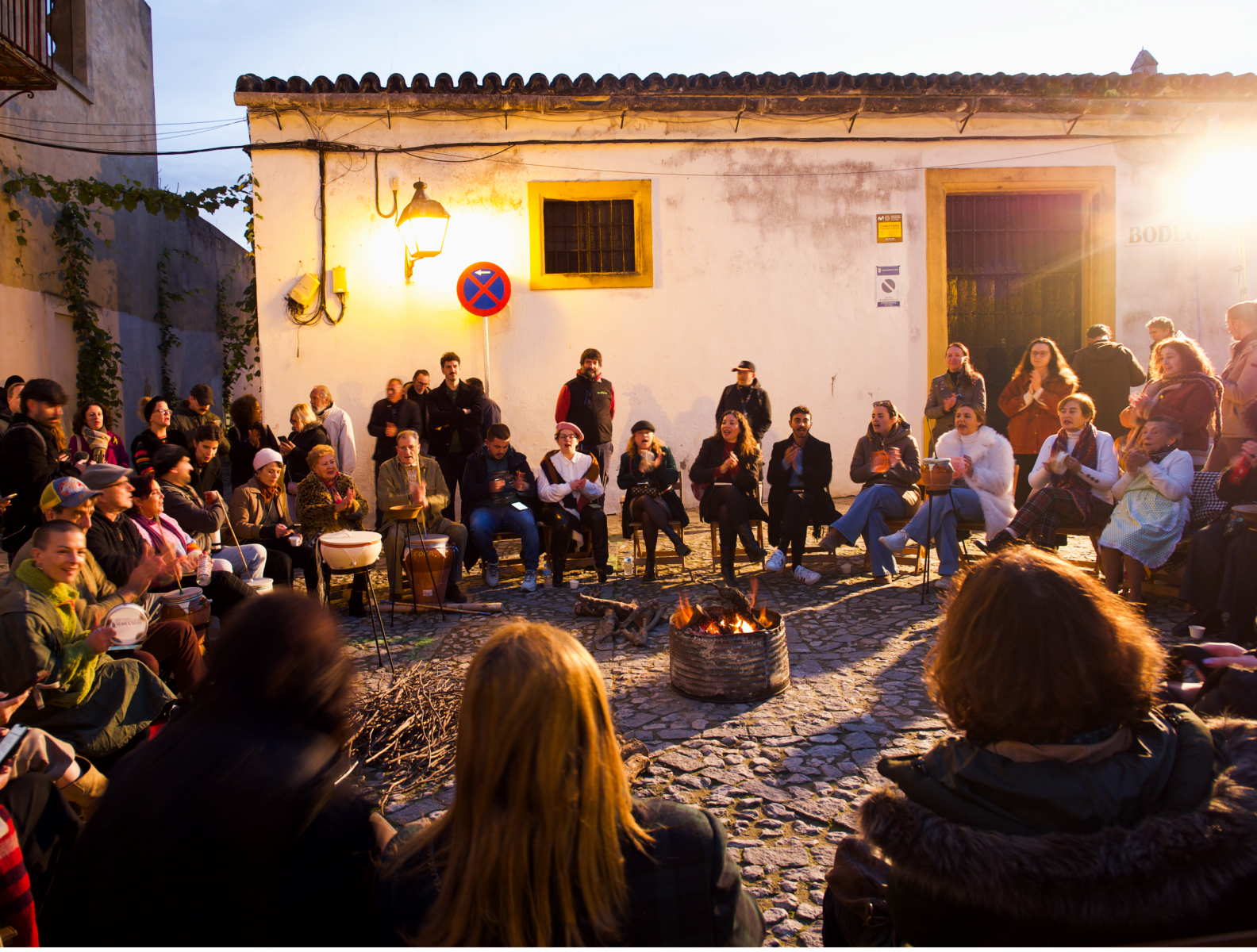
The second moment of the event unfolded as the zambomba climática, a collective and performative gathering that activated the research presented in the exhibition. Rather than a separate celebration, this shared ritual functioned as a symbolic and experiential closure to three years of collaborative work linking Jerez, Milan, and Łódź. By merging exhibition, performance, and collective participation, the final event foregrounded how artistic research and design can operate as relational infrastructures, capable of connecting local cultural practices with broader environmental and climatic questions.
We are grateful to all the participants who contributed to the success of this initiative, and whose knowledge, commitment, and collaboration made this shared research journey possible!